Four Lyrical Books to Read in Portugal
One of my favorite Portuguese writers, José Saramago, is celebrated for how he infuses historical elements into his novels, particularly about periods of political conflict that are woven into Portugal’s history. His novel, Raised from the Ground, set in the Alentejo region of Portugal, follows a family of farmers as tensions flare leading up to Portugal’s morph into a republic.
However, it’s difficult to write about Portuguese literature without first mentioning books that evoke poetry. Portuguese poetry is one of the oldest and richest literary traditions in Europe. Portugal’s literature embraces lyricism and poetry.
Poetry and Lisbon
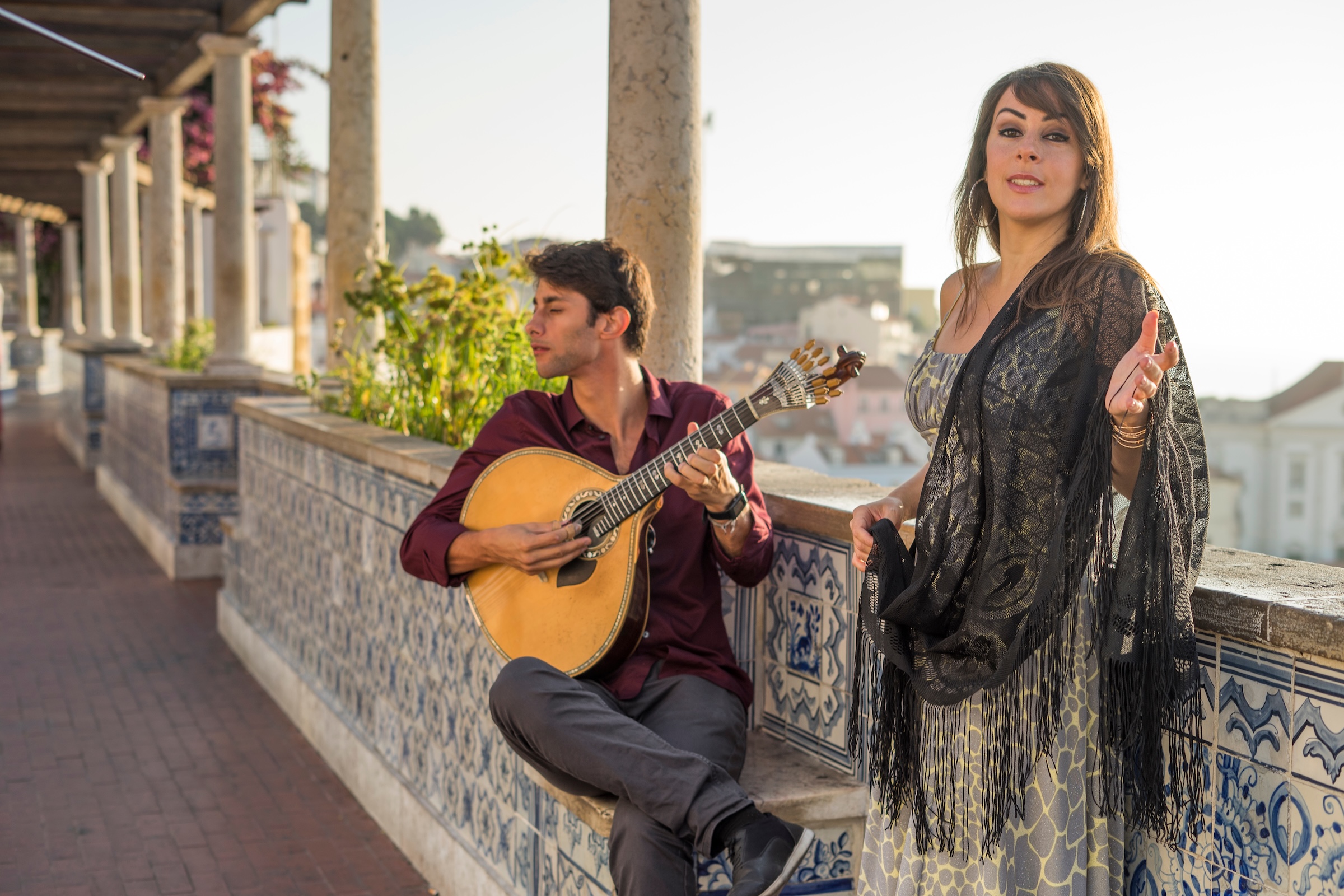
In Lisbon, it is easy to be drawn to poetry and lyricism. I was drawn to the music in poetry as I retreated with books. It seemed as if sound emanated from every corner, from each page, from fado music, Portugal’s iconic music tradition.
At the heart of fado music is longing. That feeling emanates from Portuguese poetry.
These books from Lisbon include lyricism and poetry. And saudade. Here are four books you want to read when you visit Portugal, or when you retreat to read about Portugal.
Browse the Reading Around the World bookshop
1. The Book of Disquiet
We learn more about life when we write; we find ourselves within our prose. We also find ourselves within the pages of a great book.
Fernando Pessoa is celebrated for his philosophical poetry and lyricism. As I write this, I understand more about myself, and as I read Pessoa’s words, I realize that he and I are nothing alike, and yet we have so much in common:
“I am, for the most part, the very prose that I write. I shape myself in periods and paragraphs, I punctuate myself and, in the unleashed chain of images, I make myself king, as children do, with a crown made from a sheet of newspaper or, in finding rhythms in mere strings of words, I garland myself, as madmen do, with dried flowers that in my dreams still live.”
You cannot read this book of fragmentary thoughts as quickly as you would others, for instead of plot or story, you will find style and syntax that reveal the human condition and psyche. I read this one intentionally, appreciating Pessoa’s keen internal and external observations.
The protagonist and “voice” is that of Bernardo Soares, a solitary and observant older man, a writer who has never known the affections of childhood because he lost both his parents at a young age. He has never felt as if he belonged anywhere. What it must feel like to be loved, to feel the warmth of a mother’s hug, he ponders. He has never been in love, nor has he had any friends. In fact, he’s never followed the world’s idea of ambition. He only has his imagination and dreams:
“Between myself and life there have always been panes of opaque glass, undetectable to me by sight or touch; I never actually lived life according to a plan, I was the daydream of what I wanted to be, my dream began in my will, my goal was always the first fiction of what I never was.“
The beauty of poignant prose is when we find pieces of ourselves within it. This is a solemn book, laced with melancholy, yet it could also be a necessary read for someone figuring out internally what cannot be expressed externally. In some small way, it is about going through the mire in order to master some form of existentialism.
In Lisbon, I fell asleep with this book on my chest, to the open-windowed sounds of cars, buses, and a church bell on Rua de Prata.
Fernando Pessoa was one of Portugal’s most well-known writers. Also a poet, literary critic, publisher, and translator, he is one of the most significant literary figures of the 20th century and one of my favorite writers.
2. A Little Larger Than the Entire Universe
When I read Fernando Pessoa’s poetry collection, A Little Larger Than the Entire Universe, I listen to the slant of the rhyme. I listen intently to his heteronym’s, Alberto Caeiro’s, perception of life.
For a moment, as I sit in a section of Lisbon City Center and listen to the street violinist play, I enjoy Pessoa’s avoidance of consciousness, his bask in the subconscious. Most likely, Pessoa would not have published this collection in its state, his scholar infers, but like Camus’s The First Man, I find refreshment in this work of posthumous art.
From “XLVI”:
I try to say what I feel
Without thinking about what I feel.
I try to place words right next to my idea
So that I won’t need a corridor
Of thought leading to words.
“To think is not to understand”
I attend a seminar at Casa Fernando Pessoa in Lisbon, where Richard Zenith, Pessoa’s eminent scholar, reads from this collection. When it is time for questions, I raise my hand and ask, do you think Pessoa used heteronyms as allusions to the person he could have become, had his childhood not been snatched from him? For years, scholars have tried to decipher the poet who exists under many veils, his invention a way of revealing variety of thought.
I read and his identity crisis is what I see. His interrupted childhood is what I sense. Zenith answers that Pessoa’s literary output was clearly the product of the meeting, or clash, of those two environments and their different languages, their different cultures. I read and see a poet who views himself through place and people.
“See more than a garden of who you are” and you’ll touch the core of the you who has remained hidden. I review this collection without concrete thoughts of line workings and stanza deductions, because, as Pessoa says, “to think is not to understand.”
So, I read and re-read these poems for what they are, lines occurring relentlessly, unapologetically. Potent dream thoughts, these lines, and they speak to you from a place you would not understand if you do not read it from a creative state of mind. Pessoa is a tricky writer, an unconventional one. I wrote about him in an essay for the Chicago Quarterly Review because I am fascinated by his uniqueness and nonconformity.
From: “Un Soir à Lima:”
I dream because I wallow
In the unreal river of that recollected music,
My soul is a ragged child
Sleeping in a dusky corner
All I have of my own
In true, waking reality
Are the tatters of my abandoned soul
And my head that’s dreaming next to the wall.
3. The Piano Cemetery, by José Luís Peixoto
I am wandering Lisbon at dusk, when a Portuguese student at a book van introduces me to Peixoto’s work, an author he considers one of his favorites. And now, he is also one of mine.
“In the world I was not I. I was a reflection that someone vaguely remembered. I was a reflection that someone was dreaming without believing.“

Peixoto is deliciously confusing, partly because he writes in fragmented bursts of lyricism. One of his narrators is a dead man; the other, a runner in Lisbon, and the dead man’s son. Their stories are parallel, crisscrossed, and linked. One has to pay special attention to the switches, because one could be lured by the romance and graceful sexual scenes and the heartbreak and sorrow and family saga and birth and death, yes death especially—a big theme—and oh, did I mention the piano music?
“Every time I could not help thinking that my life, diminished by those afternoons, was exactly like the suspended mechanism of a piano—the fragile silence of the aligned strings, the perfect geometry of its almost death, able to be resuscitated at any moment that never came, a simple moment like so many others would be enough, a moment which would arrive, but which never arrived.“
Piano music is encompassing; its delicate rhythm takes one through the psychological tension both narrators exude. A dead father views his family after his death, an intimate view of pain, nostalgia, and remorse. There are so many secrets: a wife fears the toll of death, but must deal with its consequences; a daughter’s husband does the unthinkable, so she gains weight until she becomes unrecognizable; a sister betrays her sister because her husband belittles her; a son runs marathons to escape it all:
“Like blood I ran through the veins of Lisbon, touched its heart, penetrated its heart, and then, more slowly, extracted myself, undid myself and came out. A secret from myself.“
The words are as elusive and as penetrating as poetry, their structure arranged into poetic forms. They center around a dream, anyone’s dream, but specifically, the dream of the Lazaro family. The men in this family make a living as carpenters, but piano making is the art that consumes them. Around the piano, in Lisbon, the narrative centers around these dreamers and heartbreakers who forget all sorrow and poverty and heartache once the notes from the piano fill the air and douse their senses. Like piano music, words pierce the senses and the reader drifts deeper and deeper into this world of dreamers and lovers.
This book was nominated for the 2012 Dublin Literary Awards. An author, poet, and playwright, José Luís Peixoto’s works have been translated into more than 30 languages.
4. 28 Portuguese Poets
When the texture of poems makes me embrace prosody, when poetic imagery makes time and place scintillate on the versed page, I know I have been hooked.
28 Portuguese Poets is a bilingual anthology I’ll treasure for its careful placement of poet and poem, its representation of each generation, and how it speaks universally yet still manages to sing of Portugal: culture, rich history, and language.
I sensed the visual artistry in Cesariny’s poetry, especially in “Being Beauteous,” one of my favorites. When Portuguese artists felt their country was being stifled by control, Cesariny and others, founded the Portuguese surrealist movement, celebrating freedom and individual liberties. According to the notes, “he quit writing and dedicated himself exclusively to visual art,” towards the end of his life.
To find new meaning in language, discover structure through syntax, yes—this is what I wrote in the margins of my book as I read. Even the foregoing of the common punctuation in some poems, replaced by emphasis on form and meter, is evocative.
What can I say, it’s in the storytelling, the rhythm, the way the words made me feel during days when prose wouldn’t suffice. Maybe because poetry is music to my soul. Maybe because poetry makes me dig deeper to find meaning. Maybe because poetry says so much in so few words. Maybe because sometimes I just need the world to be still, to communicate with me in only a few necessary words.
This is a generous and rich collection of work from 28 influential poets. So, I end with poet and professor Ana Lulsa Amaral’s serene sensuality.
From “All So Fragile:”
I try to push you from off the poem
lest I ruin it with the emotion you stir:
eyes half-closed, guarding against time,
I dream of it from afar, free without you.
For books to add to your personal library, browse our books by continent page.