Four Works of French Literature Paired With French Wines
Lately, I’ve revisited France from my journals, notebooks, books, and laptop. As I’m in the middle of completing two literary travel guides based on Ernest Hemingway’s memoir, A Moveable Feast, and James Baldwin’s memoir, No Name in the Street, I can’t help but remember the time I spent in France. If I were to sum up my experience in one word, it would be savor.
I savored France.
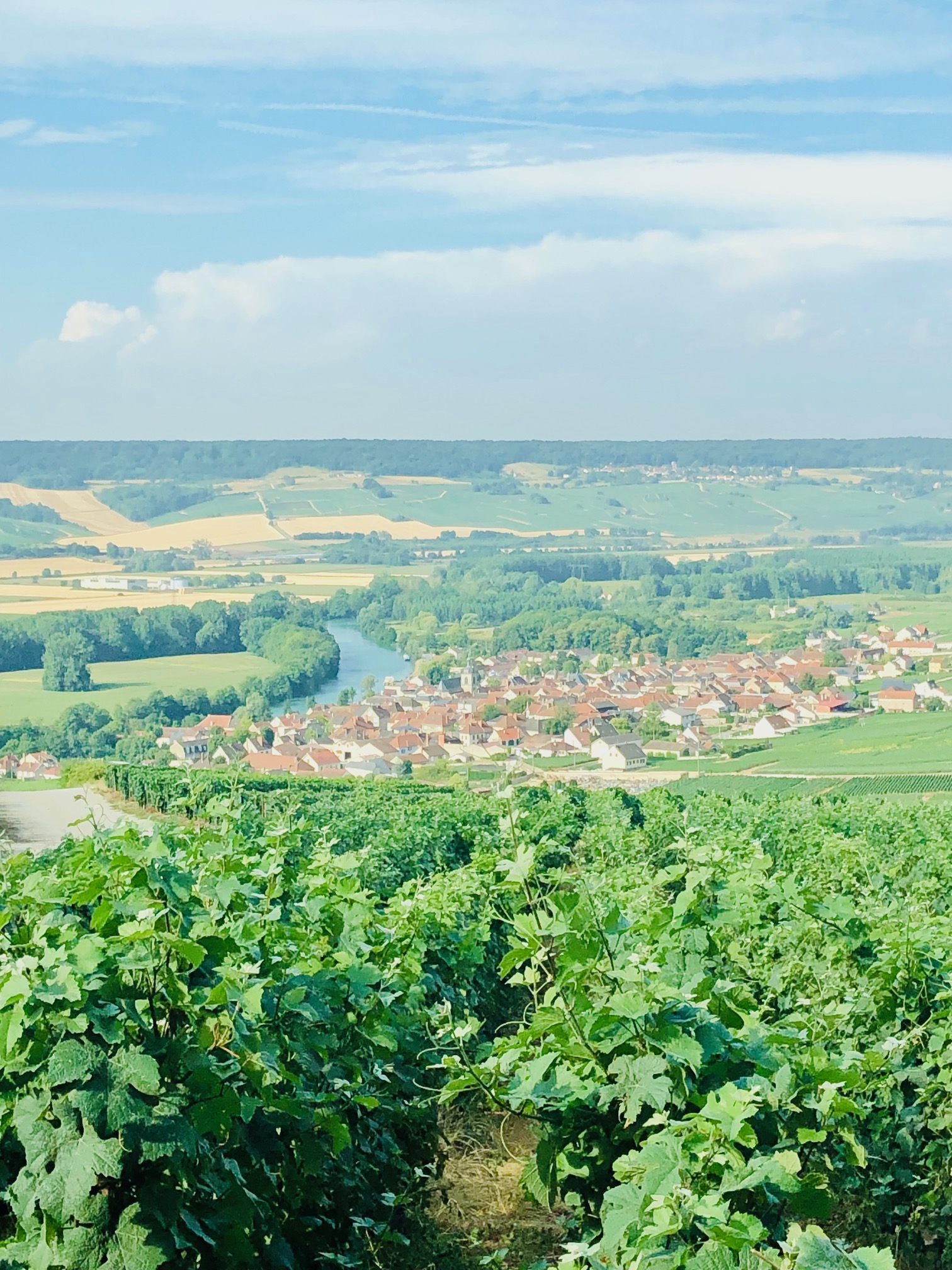
While there, I walked the streets of Paris daily, explored tourist spots and small quiet squares, spent mornings workshopping with writers at boutique hotels, and afternoons walking or cruising the Seine; I browsed bouquinistes, picnicked in Luxembourg and shopped Champs-Élysées. I spent a romantic weekend with my husband that included a visit to the Champagne Countryside. On the quiet countryside, we visited vineyards where we tasted wine and champagne. We walked quiet paths and visited small chapels. We saw France as described by some writers.
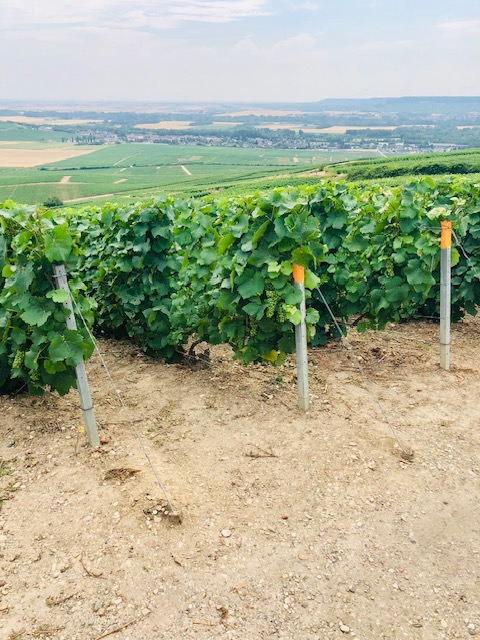
Mutigny is the highest wine growing village in France and sits at an elevation of approximately 240 meters above sea level.
Wine, food, conversation, and the written word have long shared a place in France’s cultural imagination, as writers like Orwell, Baldwin, Hemingway, de Beauvoir, Fitzgerald, and Nin made clear. So, with The French Literary Cellar, an ongoing conversation I will have with French books and wine, I plan to celebrate that intersection, to explore the books, authors, places, and French wines that make reading a way of savoring life.
Like reading, wine cultivates an atmosphere of continuous education and it enables you to learn more about a culture through its production. I am not a wine expert. In fact, it wasn’t until recently that I learned the difference between Argentinian and French Malbec. I’d never tried Sancerre until I visited Paris. An accessible wine in both France and the U.S., it is now one of my favorite French wines. I’m continuously discovering wines as I am with books.
Note: I advocate for a savoring of wine and literature. Alcohol abuse is bad for your health so if you do consume, please do so sparingly. Wines recommended in this post are based on my opinion as a consumer. I have not been paid for my opinions. Books listed are from my curated Reading Around the World bookshop which supports independent bookstores and receives affiliate payments.
Four French books paired with wine (and champagne) from the regions that inspire them
If this is your introduction to French literature, here is a fun way to savor a novel by Marcel Proust, Marguerite Duras, or Alexandre Dumas. I’ve paired elegant French wines to accompany these elegant works of literature which are meant to be read savoringly: one chapter at a time, one page at a time, and in some instances, as when one is reading Marcel Proust, one paragraph at a time.
#1 Birdsong by Sebastian Faulks
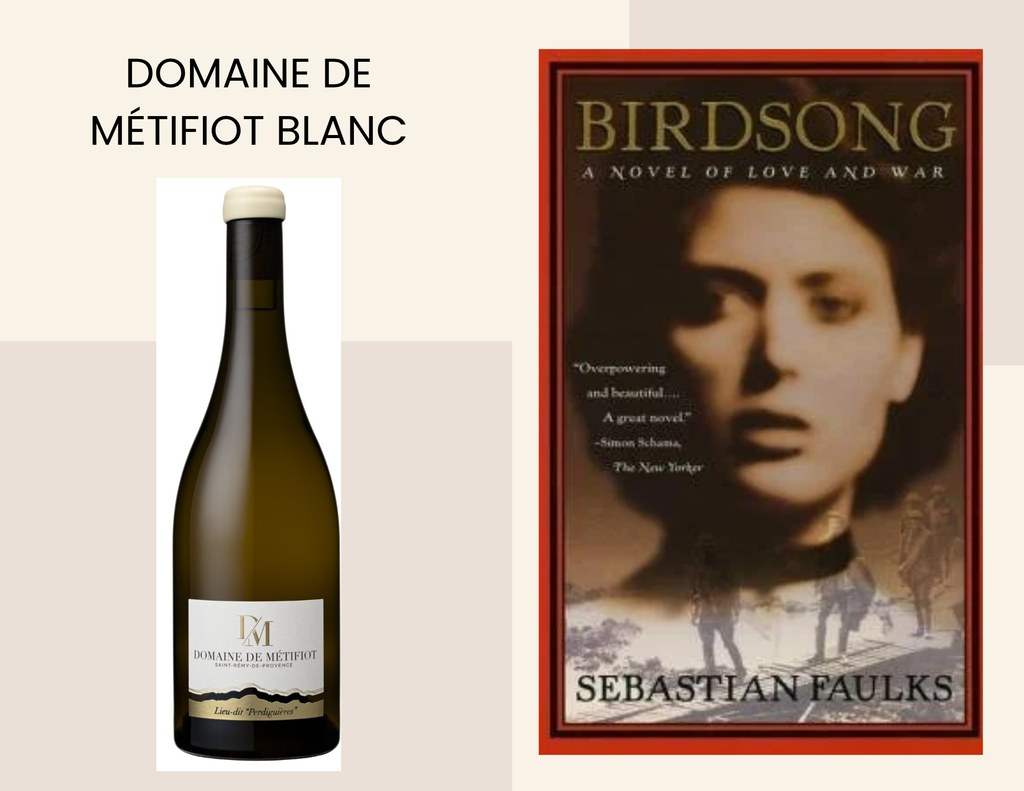
Why I chose this book
I read this book in 2015 and again this year. It is a novel in sections, with some sections particularly dark—and this is perhaps the only qualm I have with the book. What I do like about this novel is how it depicts the fragility of love during war. I tend to enjoy books that combine themes of war, love, and survival. As a historical novel, Birdsong deepened my understanding of the emotional and regional damage of the First World War. It also gifted me the French countryside through beautiful love scenes from Saint–Rémy and Plombières-les-Bains.
About the Book
Published in 1993, Birdsong is a haunting novel of love, loss, and survival set against the backdrop of the First World War. It is about a young Englishman, Stephen, who experiences a love affair with a French woman, Isabella Azaire, during his work travel to pre-war France. During the war, as he traverses the dark and brutal trenches of war as a soldier, those memories of love and the letters he writes sustains him until he sees Isabella again. He learns how the war has also tragically affected her life and observes how their lives have been shaped by hopeless desire and passion.
Generations later, Stephen’s diary is found by his granddaughter, Elizabeth. Filled with unanswered questions in her own life, Elizabeth traces her grandfather’s war path and survival story, and she learns things about her own history.
Sebastian Faulks’s fourth novel and the second in his French trilogy, Birdsong is a novel about love, memory, and the terrible cost of war.
Why I chose the Wine: Domaine de Métifiot Blanc
An aroma of rosemary flowers, this wine matches the landscape of Faulks’s novel as well as the atmosphere. In Birdsong, lovers Stephen and Isabella escape to Saint- Rémy, where they rent a small house and Stephen finds work as a furniture maker. In the evenings, they read by the fireplace and drink wine.
Domaine de Métifiot Blanc is produced at the Domaine de Métifiot estate in the heart of the Alpilles, located in Saint Rémy de Provence. The family estate produces wine and olive oil. During your literary travel to France, plan to visit the winery.
#2 The Count of Monte Cristo by Alexandre Dumas
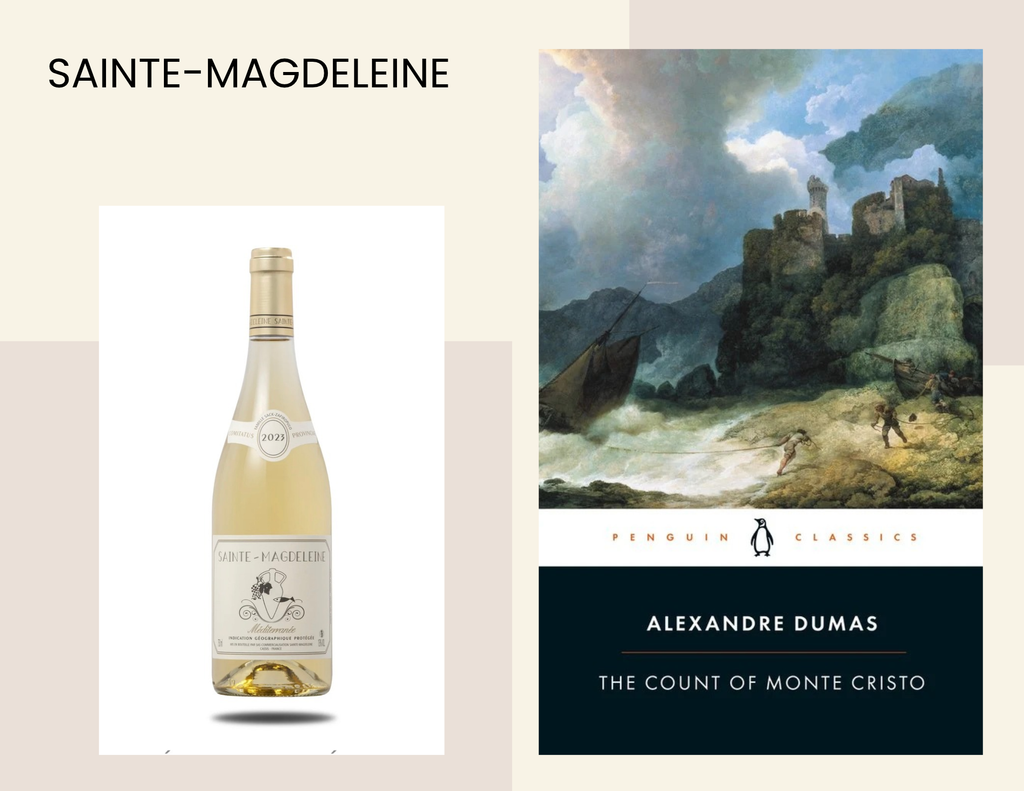
Why I Chose this Book
The Count is one of my favorite classics. This is a book you savor and stay with for a period of time. It is no short read. In fact, at more than 1000 pages, it is a reading feat. And yet this novel has stayed with me years after reading it. As you go through these scenes, you will learn things about yourself and you will gain new perspectives.
I enjoy books that console me at essential moments of life, books that leave me with themes and characters I’ll always use as reminders of the joys and ills of humanity. There are many lessons to be learned from the profundity of The Count of Monte Cristo and beneath this powerful and seemingly simple storytelling style, there are many layers to be uncovered. I suggest watching the movie adaptation after reading this classic.
About the Book
An adventure novel by the French writer Alexandre Dumas, The Count of Monte Cristo was first serialized in 1844 and published in book form in 1846.
It is about Edmond Dantès, a modest and ambitious sailor who is about to be promoted to captain and marry his love, Mercédès, when he is framed by jealous rivals. He is wrongfully imprisoned and spends 14 years confined. While in prison, he befriends a scholar who teaches him languages and tells him the location of a hidden treasure on the island of Monte Cristo. Dantès escapes prison, claims the fortune, and reemerges in high society as the charismatic and formidable Count of Monte Cristo.
Why I Chose the Wine: Sainte Magdeleine
Clos Sainte Magdeleine is found in Cassis, a beautiful town in Provence, South France. Cassis is approximately 20 miles east of Marseille, via the A50. The Château d’If, located off the coast of Marseille, is the prison where Edmond Dantès was held and where he began his transformation as the Count of Monte Cristo.
This white wine is a mirror of the sea, the limestone cliffs, the sunlight and the harbor that Edmond Dantès returns to after many years of darkness from a betrayal that upends his life. Facing the sea, the winery writes that “the vines receive sea spray daily, imbuing the wines with a unique iodized flavor.” This wine seems to celebrate rejuvenation and center the Mediterranean, just like the novel does.
#3 The Lover by Marguerite Duras
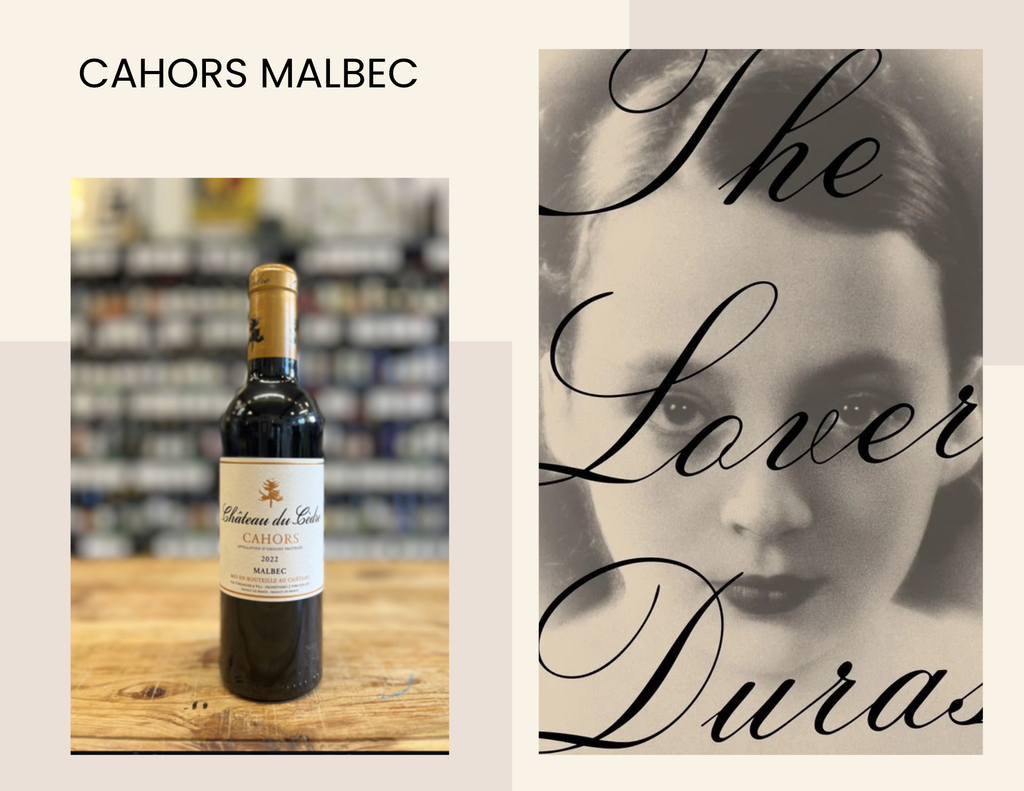
Why I Chose this Book
After I purchased it from a university list of recommended books, this novel stayed on my shelf for years, due to the subject matter. I first read it in 2021 and soon realized why it was such a literary stir. This novella is disjointed, fragmented, lewd, beautiful, lucid, restrained, reflective, fascinating and all of those things you expect from a piece of literary art. It explores the psychological complexity of shame and memory and makes the reader reach between the words, between the many white spaces the structure utilizes, beneath the simplicity, to find the underpinnings. In some ways, it is like reading poetry.
About the Book
Set against the backdrop of French Indochina (a federation of French colonial territories that existed from 1987-1964), the novel is about an inappropriate relationship between a teenaged girl from a struggling French community and a wealthy Chinese man many years her senior. Their relationship exposes the contradictions of colonial society. The girl’s family is poor but considers itself socially superior to the wealthy Chinese family. Their relationship crosses racial, socioeconomic and cultural boundaries that colonial society insists should remain intact. The book also centers the fragility of mother-daughter relationships. Duras won the prestigious Prix Goncourt for this novel, a prize given to French literature with the best imaginative prose.
Why I Chose the Wine: Cahors Malbec
Duras was a French novelist who was born in French Indochina and moved to Paris for studies. Her parents were from the southwestern part of France. Cahors Malbec is a wine produced in the southwestern French landscape of Duras’s family origin. It is a bittersweet wine, both earthy and fruity. An intense wine, it mirrors the texture of this novel. During your literary travel to France, carve out time to tour a wine estate in Cahors.
#4 In Search of Lost Time, Volume I, by Marcel Proust
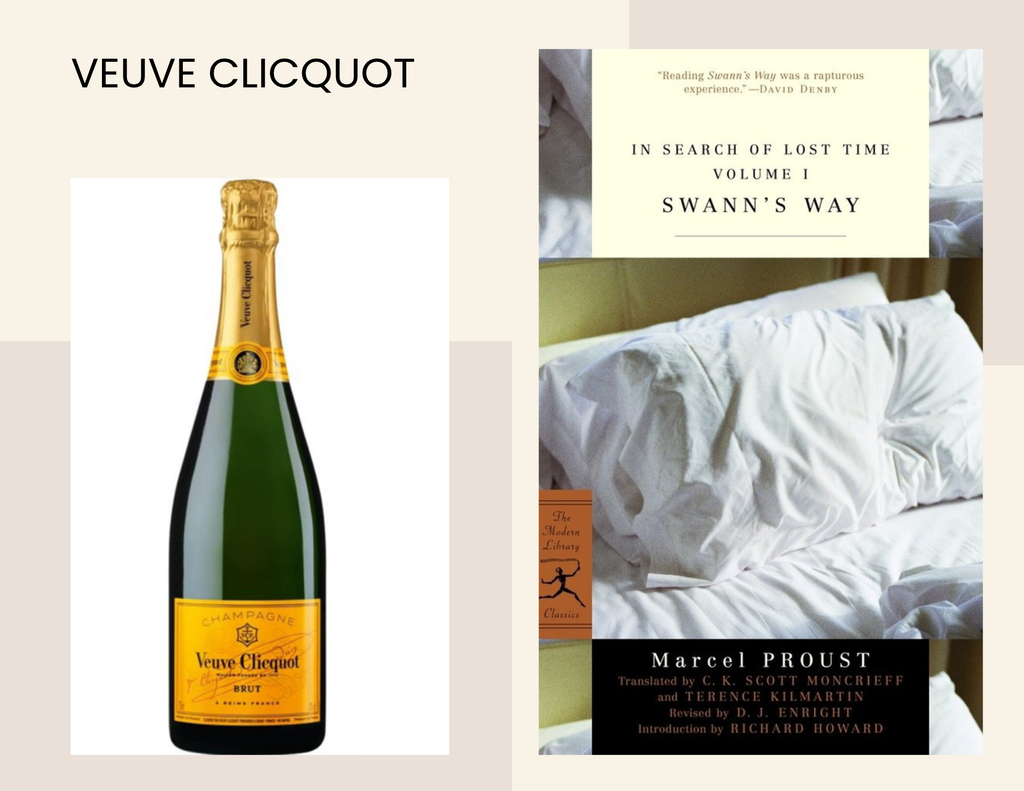
Why I Chose this Book
You don’t read Proust for story—although there is an underlying story of obsession—you read his tightly-constructed sentences for enlightenment and edification. The Overture of this first volume has been referred to negatively as 30 pages of turning over in bed. So why do scholars and curious readers insist on reading it and why is Proust so popular in the literary canon? I, too, have been determined to read his works. I’ve completed Volume I and will soon begin Volume II. I’ve also completed Swann in Love, the standalone novella taken from Volume I (I recommend this as an introduction to Proust, if this first volume seems daunting). What I enjoy is how Proust makes recollection vivid, turns what some may see as insignificant memories into extraordinary experiences, and how he showcases art, intellect and imagination.
In Search of Lost Time is in many ways a literary education in French culture, as it offers glimpses of dinner parties, estates, Parisian drawing rooms, and more. It also invites readers to French literature, with mentions of Flaubert and Stendhal. I find that reading Proust is similar to my wine-and-champagne-drinking process: I savor. The prose is elegant, yet challenging and meandering. The book cultivates reading prowess and prepares one for a deeper understanding of the literary arts.
About the Book
A boy who grows up sensitive to the world begins to have recollection of his family, friends, and neighbors when he tastes a madeleine. The treat is the triggering taste that produces a recreation of time, depicting how sensory information affects memory. The narrator tells the stories that most don’t repeat, observes those things that only a person who shies away from the world notes. The boy’s past, his childhood in Combray and his later life Balbec and Paris, his memories and observations, are recreated artfully as he explores time, memory, love, art, and the nuances of French high society.
Why I Chose the Champagne: Veuve Clicquot
Deviating from wine, I chose to pair Proust with champagne not only for champagne’s rootedness in French culture but also because of the many mentions of champagne in Proust’s novel. More than a geographical association, Veuve Clicquot has a personal connection to Proust. In Monsieur Proust, Proust’s housekeeper, Céleste Albaret, writes that Proust preferred Veuve Clicquot. Proust’s world was one of cultivated tastes. Champagne occurs often in the novel, as Proust discusses tastes and the smallest sensory pleasures of Parisian society.
Veuve Clicquot is one of France’s most celebrated Champagne houses founded in 1772 in Reims, the northeastern champagne region of France. One of my favorite Brut champagnes, it tastes like apples and pears with a hint of vanilla and has a rich, bubbly finish. This champagne is a perfect reading buddy to Proust’s Volumes as it pairs a touch of authentic French indulgence to a novel that reminds us about how taste can transport us through time.
I write about my collage of literature and literary travel from around the world. Every book included on this site is a book I have read. To read more literature from Europe, visit my Europe Bookshelf