
Visit Shakespeare and Company in Paris: The Bookshop and the Book
I visited Shakespeare and Company while in Paris and I think you should too.
If you are a literary traveler visiting this renowned bookshop for the first time, I recommend first reading the memoir, Shakespeare and Company for a clearer picture of this literary landmark. Shakespeare and Company is a recommended read listed here on the Europe Bookshelf of Reading Around the World.
The Original Shakespeare and Company
The original Shakespeare and Company, a bookshop in Paris, France, was founded by an American, Sylvia Beach, and was the home of the “Lost Generation:” American and British expatriates and writers who stayed on the Left Bank—the southern side of the Seine River. Disillusioned by war, this generation sought artistic freedom and a way to understand the world through books. At the time, Paris offered them affordable living, literary salons, and great cafés.
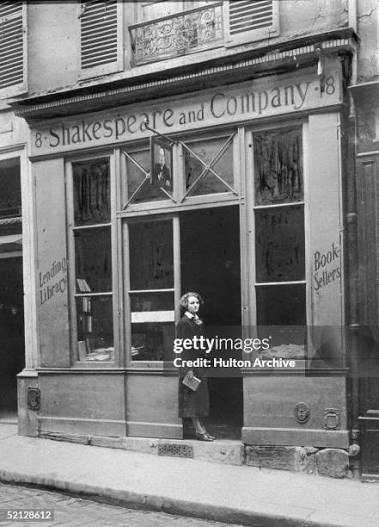
Sylvia Beach was an avid reader and a woman who imagined a community for writers who craved intellectual conversations about literature and life. Her bookshop, Shakespeare and Company, became a community gathering for English-speaking writers and readers in France.
What made the bookshop even more fascinating was how it became a literary salon that focused on the development of books and writers.
What is a literary salon?
A literary salon is a space for intellectual conversation and creative exchanges. Unlike a book club with a specific read, a literary salon encourages broad conversations about literature and the human condition.
Shakespeare and Company’s literary salon was responsible for the messaging of new works of literature—most notably, James Joyce’s Ulysses.
The bookshop became a second home for American writers in Paris, a space for French readers who wanted to get recommendations to American novels, and a resource for English-speaking readers who needed books in translation.
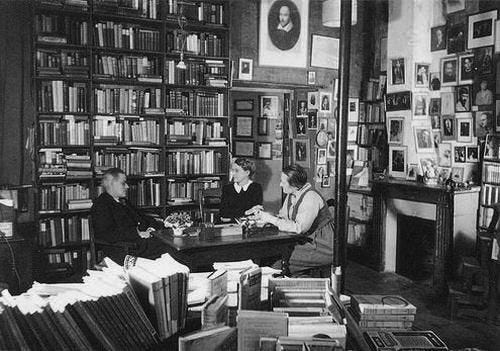
Writers who frequented the bookshop: Ernest Hemingway, Gertrude Stein, Ezra Pound, James Joyce, F. Scott Fitzgerald, Sherwood Anderson, and more.
Shakespeare and Company also sold lending library subscriptions (which means it operated as both library and reading club).
The promotion of literary reviews
One of the ways the bookshop supported new writers was by promoting literary reviews. Literary reviews are the primary route to publication for new writers. Literary reviews are where literary art is crafted, where new voices emerge.
If you are interested in literary fiction or nonfiction and haven’t read a literary review before, it’s never too late to start.
The Memoir: Shakespeare and Company
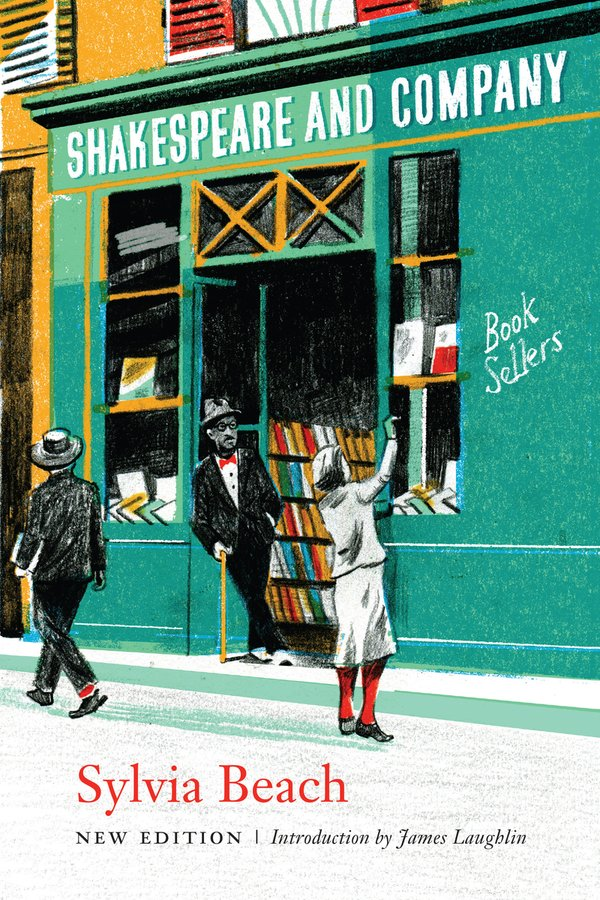
Sylvia Beach was born in America but spent most of her life in France where she became a leading expatriate between World War I and II. Her memoir details the daily operations of her bookshop and her friendship with James Joyce and his family.
The book reads like a series of journal entries, as jotting down the history of this literary behemoth was important to Beach. What one should expect are valuable behind-the-scenes information, particularly those readers most interested in the Left Bank literary aura of the 1920s that influenced great works of literature.
When Ulysses became a banned book in the U.S. and in English-speaking countries, Beach became Joyce’s official publisher and unofficial agent, administrative manager, marketer, and funder. With the help of Ernest Hemingway, she got the novel in the hands of readers in the United States. Once you read the details, it leaves no doubt that without her, we would not have had Ulysses, so the way things end for her once the book gets popular and is able to receive major publication, is disappointing.
“Now James Joyce was a man who had always supported himself and his family by teaching. At the moment, he was working seventeen hours a day to finish Ulysses, but he was earning nothing. Everything in the way of savings or gifts had been swallowed up long ago. My job of publishing Ulysses included preventing the author from going under meanwhile. The help that his little bookseller-publisher could give to a family of four persons was, as one may imagine, quite inadequate, but as a rule there was no one else to whom Joyce could turn.”
Included are anecdotal mentions of many writers.
Ezra Pound seems like the kind poet and mentor who was always rescuing other poets. Gertrude Stein, who is said “took little interest in any but her own books,” is not cast in the best light, and one can understand why after a specific scene. However, Stain did write a poem: “Rich and Poor: to subscribe in French and other Latin Tongues,” that Beach says was written about her bookshop. Ernest Hemingway was the bookshop’s most loyal patron. F. Scott and Zelda left “money on a plate in the hall of the house where they lived, so that people coming in with bills or those to be tipped could simply help themselves.” Sherwood Anderson had a comical outburst in his French publisher’s hallway when he felt he was being ignored, and so on.
“In spite of a certain boyishness, he [Hemingway] was exceptionally wise and self-reliant. In Paris, Hemingway had a job as sports correspondent for the Toronto Star. No doubt he was already trying his hand at writing fiction.”
Shakespeare and Company Today
Although the Shakespeare and Company in Paris is not the same iconic shop memorialized in this memoir, it bears the spirit of Beach’s endeavors and I feel lucky to have visited it.

The current shop, which sits opposite Notre-Dame in Paris, was founded by another American, George Whitman. Whitman renamed his shop after Sylvia Beach’s iconic location.
The original shop, which had its second location on Rue de l’Odéon, never reopened after World War II. It was shut down during the German Occupation, when a German officer walked into Beach’s shop and demanded her only copy of Finnegans Wake displayed in the window. When Beach told the officer the book was her rare copy and not for sale, he promised he would be back to confiscate all her merchandise. She quickly moved her precious books to a different location and painted over the sign. She was sent to an internment camp for six months. When she returned and her friends asked her to reopen the shop, she did not have the strength or funds to start again.
Today, Shakespeare and Company in Paris is an Instagram hub for some, a literary hotspot for others, and a café where friends socialize. The shop once hosted the Paris Literary Prize, which has been in hiatus for years.
One should prepare for crowds and cameras at this location but one thing remains constant, their great selection of books. For a curation of unique titles, the bookshop also offers the modern version of Beach’s reading subscription, the Year of Reading, prepared by an avid reader and book lover.
To read more books based in France or Europe, visit my Europe Bookshelf. Start here to plan your literary travel.