Ginzburg’s THE CITY AND THE HOUSE is the Epistolary Italian Novel to Love
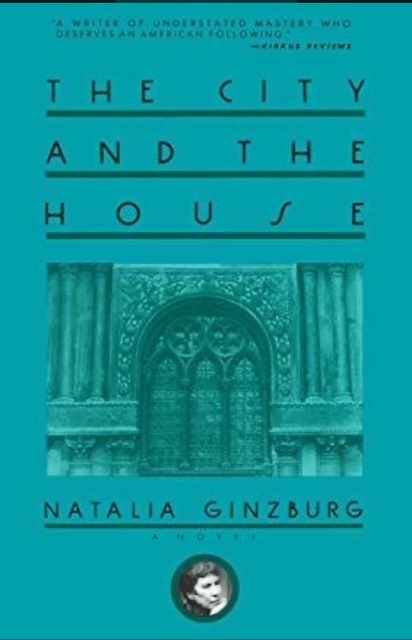
There is something intimate about letter writing. I cherish the art for its transparency, simplicity, and truth. I have enjoyed epistolary novels like Kafka’s Letters to Milena and Mariama Bâ’s So Long a Letter, so I was elated to have Natalia Ginzburg’s The City and the House as an addition to the list of books I admire in this genre.
Natalia Ginzburg was born in Palermo, Sicily, in 1916. Her works explore Italian relationships and family after World War II. She wrote novels, short stories, and essays. She lived in Rome for some time with her second husband and became deeply involved in the cultural life in Rome.
Book Your Reading Escape to Italy
Coming soon!
The Epistolary Novel
The epistolary novel tells a story through letters and diaries and illuminates characters’ inner thoughts through these forms:
Sometimes I think I’ll never see you again, and I’m happy that this should be so, because I don’t want you to see me as I am now. But at the same time I feel that perhaps you are the only person in the world I could be with without feeling exhausted.
About the book
This book of letters is about what happens to friendships once their lives take many different turns. A group of friends in the Italian town of Monte Fermo form a friendship hub at a house they have in common. One of them, Giuseppe, moves to America to live with his older brother and write a novel. The owners of the house, Le Margherita, see their relationship spiral. Soon, the fate of these friends takes different shapes as they struggle to form better lives for themselves and to overcome personal tribulations.
Perhaps I’m sorry that you are going. I won’t say don’t go, or go only for a few days, but when you are there I shall miss you from time to time.
The letters center around Giuseppe, the friend who sells his house and travels to America to live with an elder brother. Giuseppe has an estranged son, Alberico, who was raised by his aunt. Alberico lives with his boyfriend and they decide to take in a pregnant woman and raise her child as their own. The aunt dies and leaves Alberico her fortune, which ironically makes him rich while his father struggles to fend for himself. Father and son try to rebuild their relationship through letters and that subplot takes an interesting shape. Meanwhile, Giuseppe writes to Lucrezia, his former married lover, who now has questions about her life that seems to have morphed from Giuseppe’s exit out of their threesome. The storytelling introduces some surprising turns that affect the stability of these friendships and show how people grow together only to grow apart with life’s trajectories.
Letters between friends
Some friends are ex-lovers and good companions. Some weather death and divorce. There are open marriages and marriages of convenience. There is love and heartache. Even with broken dreams the letters continue to show people who are finding some means of surviving in a weighted world.
They write to each other to keep up with the changes in their lives. They write to each other when they are lonely or about to make major decisions. Sometimes the letters are good, sometimes they pierce:
Real friendship does not scratch and bite, and your letter scratched and bit me.
Why I love this book
I enjoyed this book for the depth of the seemingly simple prose, for the epistolary form that worked so well, for how love takes various shapes to be celebrated. I was fascinated by how each character owns their individuality and uniqueness, and how fragility is showcased gracefully.