
Discover the World in These Intriguing Memoirs
I enjoy reading memoirs because I find the experience transformative. Memoirs introduce me to the intricacies of a culture or place that I may not have discovered otherwise.
When I read personal stories that carry universal truths, I am reminded that I am not alone in this world, that there are people in other continents (sometimes in my state or country) with similar experiences. I am not only reminded of fragility but also of resiliency and hope.
The memoirs on this list show what the writer Vivian Gornick meant when she said, in her book, The Situation and the Story, that “the piece builds only when the narrator is involved not in confession but in this kind of self-investigation, the kind that means to provide motion, purpose, and dramatic tension.”
This list of nineteen memoirs from thirteen countries around the world will help you discover the beautiful and ugly things about the human condition.
The Devil that Danced on the Water, by Aminatta Forna
When Aminatta Forna is ten years old, she opens the door to two men from the secret police who came for her father. He is killed a year later. This searing memoir is her search for truth. What really happened to her father, a political star who suddenly was gone too soon? What she learns is cutting, although not surprising.
A mixture of memoir with the texture of researched narrative nonfiction, this book tells of a postcolonial time in Sierra Leone, when the country tried to embrace a western democracy. It offers context for the war that would erupt in Sierra Leone in the 1990s. Forna is one of my favorite writers. Her novel, The Memory of Love, is recommended in “The Core Shelf.”
Born in Scotland and raised in Sierra Leone and Great Britain, with periods of her childhood spent in Iran, Thailand, and Zambia, Aminatta Forna has been a fellow of the Royal Society of Literature. The Devil That Danced was shortlisted for the 2003 Samuel Johnson Prize.
The House at Sugar Beach, by Helene Cooper
Often, I am asked to recommend a book about Liberia. I usually point to this memoir. This memoir is written using literary devices and yet also delves into history that informs of an important period in both American and Liberian history.
The House at Sugar Beach, a twenty-two-room mansion by the Atlantic Ocean, is where Helene grew up. A descendant of the first freemen who sailed to Liberia from America, hers was a privileged Liberian childhood that transitioned to loss and terror. As she traces her family’s history, the book examines Liberia’s fraught history with America, while also uncovering the ties that African Americans have with Liberians. This memoir contextualizes Liberia’s descent into civil war even as it explores Helene’s reconciliation with the idea of returning home to find the adopted sister her family abandoned when they fled the country.
Helene Cooper is a Liberian-born American journalist and Pentagon correspondent for The New York Times. The House at Sugar Beach was a National Books Critics Circle Award finalist in 2008 for autobiography.
Do They Hear You When You Cry, by Fauziya Kassindja
Fauziya, a Togolese, enters the United States illegally because she is a seventeen-year-old avoiding marriage to a forty-five-year-old man who wants her to undergo the procedure kakia, or female genital mutilation (FGM). Her father, who was against the procedure, has recently passed, and as is their custom, she is now in his older brother’s charge. Her mother, who also does not believe in the process because her sister died from it, is vanished from the home and business she built with her husband (again, according to tribal custom).
When Fauziya tries to explain this to INS officials, they do not understand how someone could not remain within their country and avoid an arranged marriage. She asks for asylum, but is denied because by then, most people do not know what FGM is—it also doesn’t help that she has entered the U.S. illegally. This memoir follows Fauziya’s mental spiral while a U.S. prisoner. It is a personal account that offers a nuanced look at the practice of female genital mutilation.
Fauziya Kassindja was born in Togo. In 1994 she fled to Germany and then the United States. She was granted U.S. asylum in 1996 after the landmark decision Matter of Kasinga, where FGM was formally accepted as a form of persecution.
A Long Way Gone, by Ishmael Beah
A Long Way Gone details the 1991 war in Sierra Leone, when as a young child, Beah is separated from his family and forced to become a child soldier. The Revolutionary United Front (RUF), the rebel group responsible for the eleven-year war in Sierra Leone, caused a collapsed economy and they carried out the kind of cruelty that included boys and girls being recruited as child soldiers and prostitutes.
This memoir moves a reader in unimaginable ways. As a war survivor who was also separated from her family at a young age, it made me consider that perhaps I did not look beyond the menacing faces of the child soldiers I encountered to consider that they too were trying to survive. The memoir encourages a reader to consider the different layers of war, the different kinds of victimhood.
Ishmael Beah is a Sierra Leonean writer, human rights activist, and a UNICEF Goodwill Ambassador. A Long Way Gone was named Time magazine’s Top 10 Nonfiction Books of 2007.
Blue Nights, by Joan Didion
Joan Didion makes ordinary contemplations extraordinary. She was seventy-five years old when she wrote this, one of few memoirists who could pen the present tense with such poise that it places you right in the middle of a scene with simplicity and ease.
Blue Nights is a candid reflection on death, motherhood, illness, and the loss of Didion’s only daughter, Quintana. It is nonlinear. It is grief and fragility elucidated. I recommend reading this after The Year of Magical Thinking, wherein Didion deals with the sudden loss of her husband, business partner, and writing soulmate.
Joan Didion was an American writer and journalist born in California. She was considered one of the pioneers of New Journalism. In 2005, she won the National Book Award for Nonfiction.
The Diary of a Young Girl, by Anne Frank
This memoir taught me the importance of journaling. I felt oneness with the bookish Anne as a young girl reading her diary. She is every teenager in this book and yet she is not, as she wrote through conditions that most cannot fathom.
During the Nazi occupation of the Netherlands, Anne Frank received a blank diary as one of her birthday presents. She writes in the diary from the attic of the Amsterdam home where her family seeks shelter for two years from the Nazis. In her everyday diary entries, Anne searches for understanding of the world, for understanding of her life circumstances, for understanding of the times around her. She writes for a world she hopes will change for the better.
Anne Frank gained fame posthumously and became one of the most-discussed Jewish victims of the Holocaust with the 1947 publication of The Diary of a Young Girl, which has been published in more than 70 languages.
The Big Sea, by Langston Hughes
I enjoy poetry, travel, and books, music, art from the Harlem Renaissance. This memoir is an embodiment of all of those things. This book by the great poet, Langston Hughes, will take you through the Harlem Renaissance to Paris, aboard ships with Hughes as he writes poetry and ventures to places like Niger, Benin, The Canary Islands, Senegal, Mexico City, and more.
I enjoyed the simple and direct prose. Each chapter feels like a short story. As a literary artist struggling to find fixed income, Hughes took odd jobs and wrote about his present and past struggles. By examining his years as a twenty-something-year-old aspiring poet in Harlem, this memoir helps you understand American Literature, the Harlem Renaissance, and what it meant to be a Black man in 1920s America.
Langston Hughes was an American poet, social activist, novelist and playwright. He is known as one of the leaders of the Harlem Renaissance.
A Woman in Berlin, by Marta Hillers
“It began with silence,” is how the thirty-four-year-old German and Russian-speaking journalist describes the brutality of Russian soldiers in Germany, during the period of Germany’s collapse, when Hitler committed suicide and the Russian army gained control of Berlin.
The diary of a German woman captured between April to June of 1945, this memoir is heavy, with lyrical grace, and these words will slice through the pages and stab you. But it is a necessary read, even poetic at times—how she pulls this off is extraordinary. The best estimates say more than 100,000 women and pubescent girls were sexually abused during this timeframe. It took years to find a German publisher to publish this memoir and even then, it was “quickly relegated to obscurity.”
Marta Hillers was a German journalist. A Woman in Berlin was first published in English version in the United States in 1954 and subsequently translated widely.
The Scent of God, by Beryl Singleton Bissell
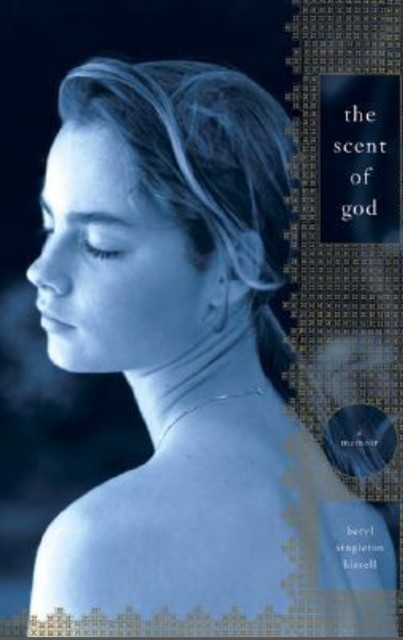
Beryl enters the cloistered monastery of Poor Clares at the age of eighteen. After fifteen years of devoted service, she is called home to help take care of her sick father in Puerto Rico. There, she meets and falls in love with an Italian priest. This reflective and forthright memoir details a nun’s experiences of love and guilt, as she wrestles with religious and secular desires.
Beryl Singleton Bissell was a columnist with the Cook County News Herald for 10 years. The Scent of God was a Notable Book Sense selection in April 2006.
Dreams in a Time of War, by Ngũgĩ wa Thiong’o
Ngũgĩ wa Thiong’o is the fifth child of his father’s third wife. Abandoned by his father, he is raised by his village’s customs. A young boy who finds joy in books, he experiences firsthand the displacement of colonialism as he is uprooted from his African schools due to British colonialism. His childhood story is affecting and provides context for the writer and activist he becomes.
Laden with complexities that are told with storytelling grit, this is a profound and descriptive story. This memoir offers perspective of the many changing layers that make up Kenya’s history, such as the history of Indian migration in Kenya and their introduction of tea seeds, and the rise of the famous activist and nationalist leader, Kenyatta, whose rule affected Kenya’s economy.
Ngũgĩ wa Thiong’o was a Kenyan writer and academic who has been described as East Africa’s leading novelist and an important figure in modern African literature.
Reading Lolita in Tehran, by Azar Nafisi
You will either hate or love Nabokov, Austen, and James after reading this memoir. I read, revisited and appreciated their works because of this memoir. And as someone who survived war partly with the help of books, this memoir has a special place in my home library.
Nafisi returns at age thirty to teach at an Iranian university during the height of Sharia Laws, when young Iranian women faced more restrictions than their mothers. When Nafisi decides to host a comparative literature book club from her home, she learns just how much books are liberating to the group of young women. They share a lot of intimate discussions over books like The Great Gatsby, Pride and Prejudice, Lolita, Daisy Miller, Gone with the Wind, Tender is the Night, The Scarlett Letter, and more. Their surprising turns of their conversation during these discussions become a highlight of the memoir.
Azar Nafisi is an Iranian American writer and scholar of English Literature. Reading Lolita was a New York Times Best Seller for 117 weeks.
The World of Yesterday, by Stefan Zweig
Just as Hemingway’s A Moveable Feast and Achebe’s There Was a Country; A Personal History of Biafra are autobiographical stamps of time, place and indelible literary periods, so is this compelling historical account by Stefan Zweig. He writes beautifully and sorrowfully of Vienna at the start of the 20th century, the literary metropolis he once knew. Each page of this memoir made me more and more appreciative of Zweig’s works as I learned how much he adhered to language, to words that were structurally arranged into literary portraits on the page. At times he even abhorred his first poetic pieces because he thought he should have given himself more time to efficiently grasp the terms of literary art. His novel, The Post Office Girl, is listed on “The Core Shelf: 50 Novels Every Personal Library Deserves.”
Each chapter of this memoir made me appreciate a time and era when books were prominent and intellectual discussion was paramount. As a child, I grew up in my own makeshift literary world and as an adult, I wanted to disappear into the literary Vienna that Zweig describes. This is not a memoir one reads for enjoyment, rather, one reads it for enlightenment and an understanding of the world.
Born into a Jewish family, Stefan Zweig was an Austrian writer raised in Vienna, Austria-Hungary. During the 1920s and 1930s, he was one of the most-read and translated authors. His works have had several film adaptations.
Heavy, by Kiese Laymon
Secrets can be heavy. Secrets carry consequences for the body, the mind, the soul. This memoir is about making sense of buried secrets, about examining how the body suffers and carries the weight of secrets. Kiese Laymon writes about growing up in Jackson, Mississippi and he details his complicated relationship with his mother, with his body, with obesity, anorexia, and sex.
I truly enjoyed reading this memoir of a masculine perspective, enjoyed making sense of this intense and complex familial relationship, enjoyed the layered art on the page, the sensitivity to structure, enjoyed noticing how repetition shaped the style of this conversation between son and mother. I read and drew closer to this bookish Black man trying to make his way in a world where he feels displaced and isolated.
Kiese Laymon is an American writer and professor of English and Creative Writing. Heavy was named one of the best Nonfiction of 2018 by Kirkus Reviews and The New York Times.
Angela’s Ashes, by Frank McCourt
If you are curious about how poverty, starvation, malnutrition, and disease affect a child, read this memoir. This is a bildungsroman that is worth reading for both story and literary technique. Frank McCourt is born in America but his family returns to the slums of Limerick, Ireland, where he grows up poverty-stricken. His mother, Angela, has many children and no way to feed them since his father is an alcoholic who spends his wages on drinks.
Frank may not have food to eat or coals to light the fire, but he has stories about Ireland told by his drunk father, he has stories of his neighbors, stories of survival, and he has his love for books that will ultimately get him back to the United States. What makes this memoir unique is how it encapsulates melancholy but is also witty and entertaining.
Frank McCourt was an Irish American teacher and writer. Angela’s Ashes won the 1997 Pulitzer Prize for Autobiography and the memoir became a biographical drama film.
A Moveable Feast, by Ernest Hemingway
“But Paris was a very old city and we were young and nothing was simple there, not even poverty, nor sudden money, nor the moonlight, nor right and wrong nor the breathing of someone who lay beside you in the moonlight.”
I feel as if I am breathing the same air as I walk the streets of Paris with Ernest Hemingway. He is poor, writing during the day, socializing and drinking at night, struggling with his writing, and upset whenever anyone tries to discuss his work with him or tells him he is a good writer. These vulnerabilities laid bare and the references of notable writers of the time construct a portrait of American expatriate writers living in Paris during the 1920s.
Ernest Hemingway was an American novelist, short-story writer, and journalist. In 1954 he was awarded the Nobel Prize in Literature.
First They Killed My Father, by Loung Ung
This is the second memoir about child soldiers on this list, and it is the first memoir that introduced me to the subject from the child soldier’s perspective. Like Beah’s A Long Way Gone, this memoir helped me, a victim of child soldiers, begin to see their victimhood also as I slowly understood how they were also victims of war.
One of seven children of a high-ranking government official, Loung Ung lived a privileged life in the Cambodian capital of Phnom Penh as a small child until April 1975, when the Khmer Rouge army storms the city. Her family flees and are separated. Loung is forced to work in a work camp for orphans and train as a child soldier. It is a powerful story that highlights resilience.
Loung Ung is a Cambodian American human rights activist and lecturer. First They Killed My Father won the Asian/Pacific American Award for Literature and was adapted into film.
Long Live the Tribe of Fatherless Girls, by T Kira Madden
The creative structure and lyricism of this memoir lures. The structure befittingly encapsulates the dizzying life Madden has as she came of age in Boca Raton, Florida. From extravagance to drugs and alcohol addictions and white-collar crime, Madden’s parents live an unstable life that would eventually trickle down to her. Faced with abandonment and reckoning with desire as a queer teenager, she finds her tribe in fatherless girls.
T Kira Madden is a Kanaka ‘Ōiwi (Native Hawaiian) writer. Long Live was named a New York Times Editors’ Choice.
There Was A Country, by Chinua Achebe
There was a country. It was called Biafra. This country existed for three years, until 1970 when it “fell,” claiming more than three million lives. Forced to flee a section of Nigeria, Chinua Achebe was a citizen, pioneer, even one of the writers of the constitution for that country. This captures his experience in the brief time he was a Biafran.
This is a heart-wrenching history and one that has gained so little publicity. That Africa—and the world—once had a country called Biafra, is something one should know. As an Igbo man and a victim of the attack on Igbos, Achebe was very influential within the Biafran world, even acting as envoy to Sweden, Canada, Finland, and many other countries.
Chinua Achebe, often called the father of modern African literature, is best known for his novel, Things Fall Apart (recommended in “The Core Shelf”). There Was a Country is said to be a defining work of modern African nonfiction. It was published six months before Achebe’s death.
Slow Motion, by Dani Shapiro
This is one of my favorite memoirs and one of the first memoirs I read that showed me how a true story can be crafted with grace and still embody the rawness of honest emotion.
Emotionally riveting, this memoir hones in on both the interior and exterior life of a twenty-something-year-old college dropout as she navigates life after her parents are in a life-altering car accident. Caught in a love affair with a wealthy, married man who offers her the fast life of luxury hotels, private transportation, exotic trips, booze, and drugs, it isn’t until she is faced with her parents’ mortality that she starts to consider her life choices. This is written from a present tense perspective that captivates, with a literary structure that veers between present and past in a spellbinding way.
Dani Shapiro is an American writer and the author of six novels and three memoirs. Slow Motion was a national bestseller.
To discover new books and places to visit, join me on the reading around the world trail.