Reading Germany: Literature Sent Me On a Cultural Tour of Dresden
I read David Szalay’s All That Man Is and decided to book a day trip to Dresden from Prague, where I’d been staying for five days.
It was a spur of the moment decision. But this is what my books do to me. In any case, the trip proved worthwhile.
(Pssst…have you ever taken a day trip to another country? Drop a comment if you have. Interested in hearing about your experience).
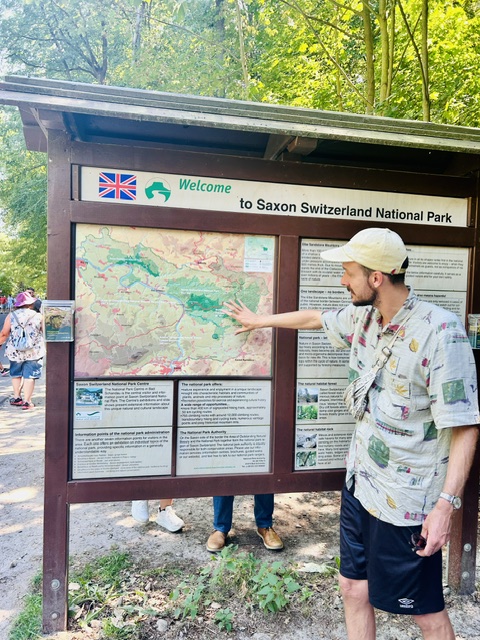
I joined a comfortable van of eight people, and we embarked on our nine-hour day trip with our guide, Stepan, a very knowledgeable Czech tour guide.
Back to Szalay’s book.
All that Man Is is a book of character portraits that tells the stories of nine men, younger and older from different walks of life, who are grappling with isolation, loneliness, and life changes. These characters travel to different cities in Europe: Prague, Vienna, London, and more. The book escorts you beyond its male characters and into a world of exploration. After all, we all have things to sort out in our lives.
Dresden is where Karel and Waleria, from All That Man Is, drive after they meet up as they do every few weeks. Dresden is a small, walkable city of baroque architecture, castles, museums, and shops.
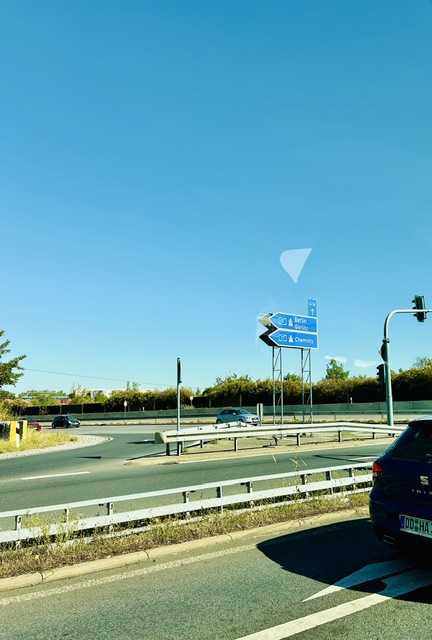
So, I looked up the distance of Dresden from Prague and since it was only a drive through bits of countryside and across the Czech border, I decided to book the trip at $139 U.S.
At this time, I was in the middle of my Reading Prague Challenge, which is part of my overall Reading Europe challenge. And here was an opportunity for me to read and travel to Germany.
A Cultural Tour Through Dresden
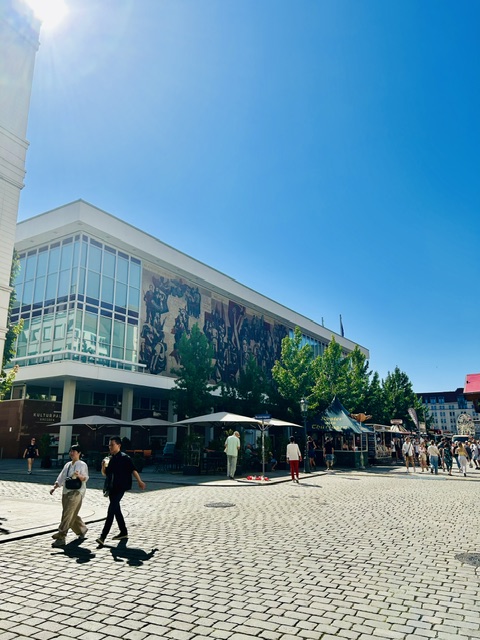
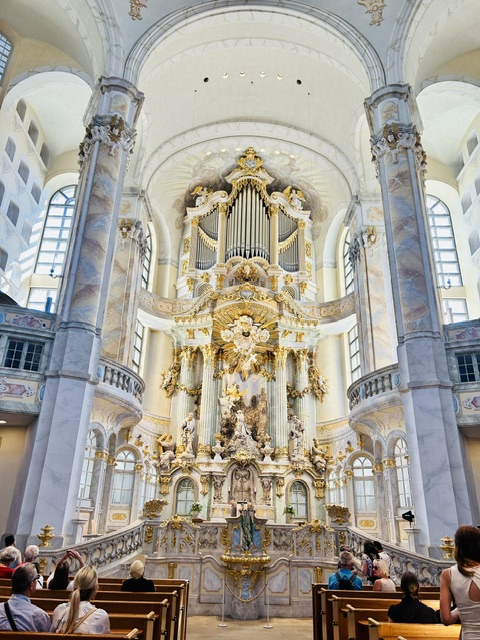
Our walking tour started on Neumarkt, in front of one of the most beautiful churches.
Church of our Lady is a landmark of the city and one of the most beautiful baroque churches in Germany. It is a symbol of peace and reconciliation.
The Neumarkt is a significant historic square in Dresden. This square is considered one of Dresden’s gems. Originally a market, it is now a major commerce hub with beautiful buildings, museums, galleries, and a shopping complex.
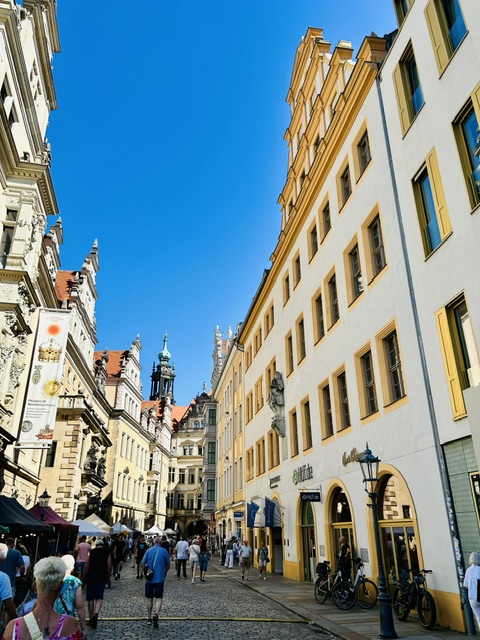
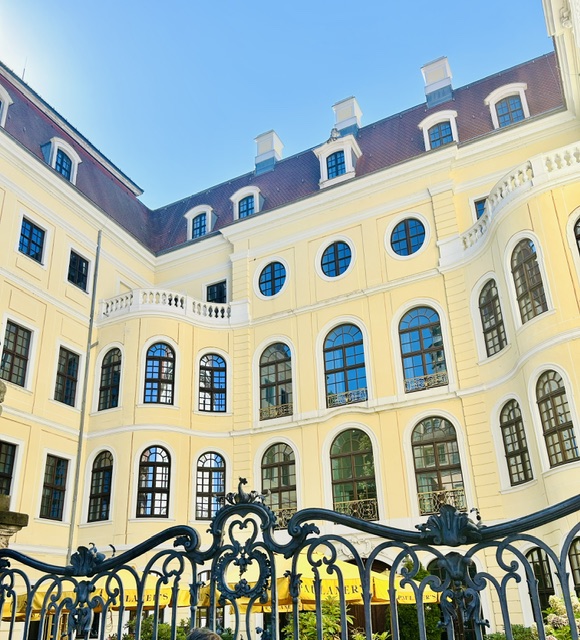
Neumarkt also hosts the Academy of Fine Arts. It’s a great place to walk and explore Baroque architectural and cultural history at your own pace.
The square was almost completely wiped out during the Allied bombing of World War II and later rebuilt.
Speaking of World War II, during the drive Stepan mentioned Kurt Vonnegut’s Slaughterhouse-Five, a book about an American soldier taken captive in Dresden during World War II.
When we took a lunch break during the tour, I opened Slaughterhouse-Five on my Kindle and started to read. The first few pages, the setup to the story, was appealing. However, when the story got to Billy, I was a little lost because of the sudden change in tone and perspective. Frustrated, I stopped reading. Sorry to disappoint, book friends.
Back to the walk.
Three Spaces Ideal for the Literary Traveler
We walked past Baroque structures to Zwinger, a palatial complex with beautiful gardens. And as you know from reading this blog, I love visiting gardens around the world.
- Zwinger palatial gardens. This is an area where you can linger and read or observe and journal. It is ideal for the solo, literary traveler.
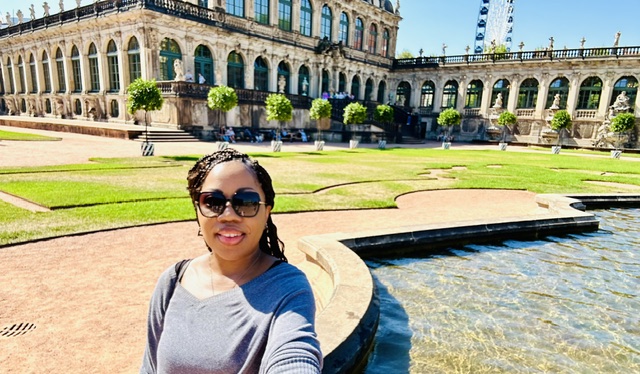
Dresden Zwinger is considered one of the most famous monuments in Dresden.
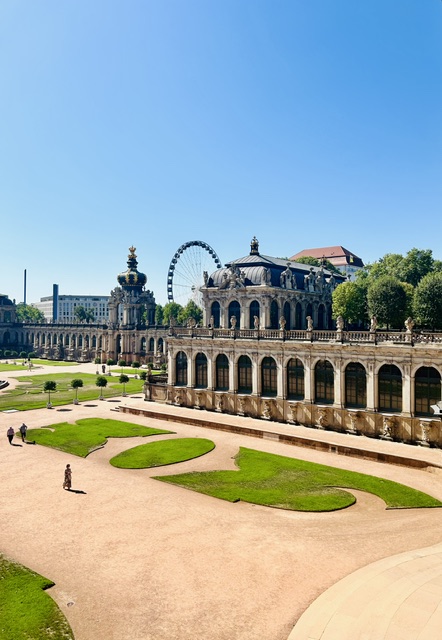
The palatial complex is an important landmark of the Baroque period in Germany. In 1945, the Bombing of Dresden hit Zwinger in a major way. The fact that it was rebuilt is a positive and firm response to the destruction of war.
We made our way slowly through Dresden’s long promenade, Brühl’s Terrace—a 500-meter-long historic terrace.
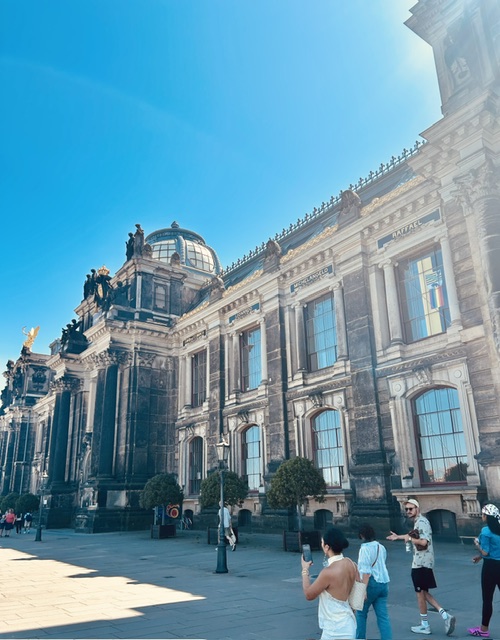
2. Brühl’s Terrace is aptly named—I like the terrace in the name—because it feels like a gathering place to stroll and observe. It is a stunning promenade that you can walk to observe street artists, relax in small green gardens, or view historic monuments and galleries.
We walked by the Albetinum, a beautiful art history museum.
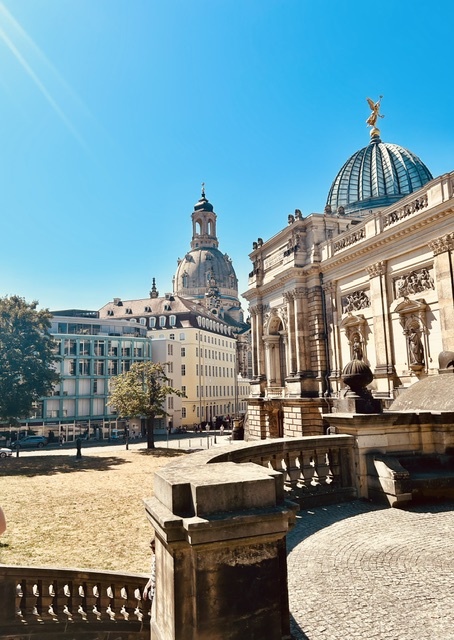
Bruhls Terrace is nicknamed the “Balcony of Europe” for its sweeping views of the Elbe River and the city. It invites you to see one of my favorite places: The Elbe River.
3. The Elbe River is a beauty to behold. From the terrace, this spot is lined with many benches and is perfect for a stroll. Reading next to the Elbe River is a great literary moment.
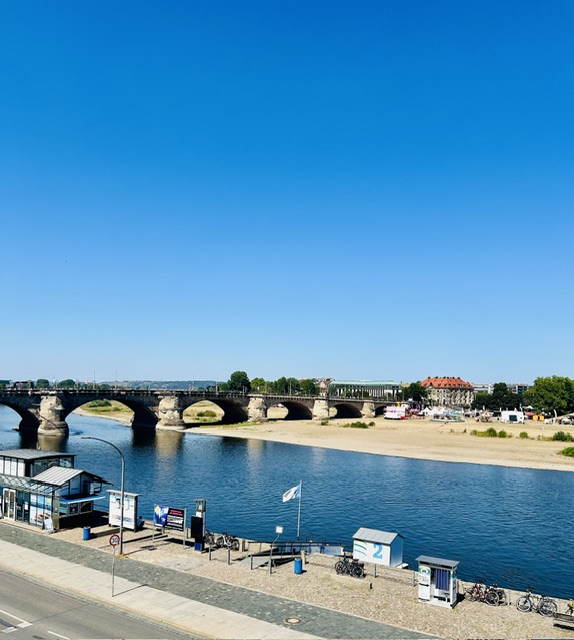
Unfortunately, Dresden (specifically the Dresden Elbe Valley) lost its UNESCO World Heritage status because of the building of the Waldschlösschen Bridge, which, according to UNESCO, made it lose its cultural landscape integrity.
Literary Dresden (and Germany)
As mentioned, Dresden is mentioned in David Szalay’s All That Man Is and Vonnegut’s Slaughterhouse-Five. There are also others, like Uwe Tellkamp’s The Tower and Teresa Simon’s The Women of the Rose Villa.
After this journey, I decided that Germany would be my reading challenge for September. And what better time to try Thomas Mann’s challenging classic, The Buddenbrooks, and to reread the harrowing, A Woman in Berlin (which is listed on my Core Shelf).
So far, I have not been optimistic about my reading experience with Buddenbrooks but stay tuned for more about my Reading Germany Challenge.
To find your next read from Europe, browse my Europe Bookshelf.