From Africa to the World: Nine Novels by African Women Writers that Inform
Revisiting my Goodreads shelves, I realized I’ve amassed 139 books on Africa. Yet those are only books I’ve kept track of since graduate school in 2012. I have not included books I’ve read since I was younger. One such book is a rare Liberian classic I’d like to acquire: Bai T. Moore’s Murder in the Cassava Patch. I’ve read this book as a child, but finding an authentic copy at a reasonable price, even during my travels to Liberia this year, eludes me.
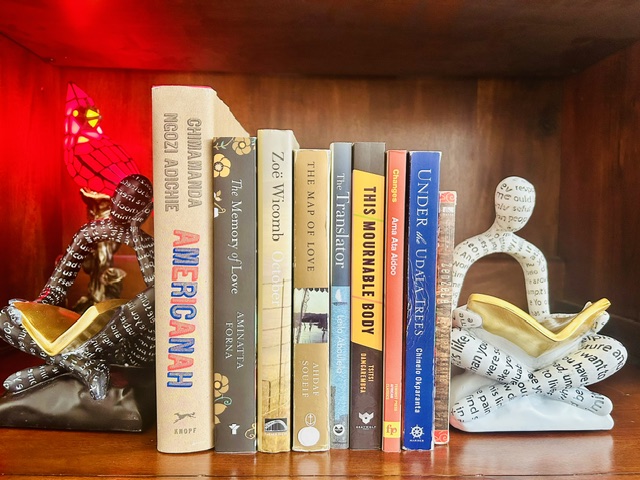
Some of my favorite novels from Africa, like the nine mentioned here, have made it from the library book pile and onto my physical “Africa Shelves” at home. Others are still being organized and restored from storage. Some I’ve included on The Core Shelf.
I’ve decided to focus on these nine novels from African women writers because I admire how versatile they are with language, style, time, and place. They confront issues of gender, race, and sex disparities while also keeping readers engaged in conversation with subjects of womanhood, exile, conflict, career, motherhood, love, marriage and internal strife. These novels inform us about the world and teach us about different regions and countries.
Lastly, the way in which these novels render story arc and storytelling, the unique prose styles and alluring narrative voices, is simply stunning.
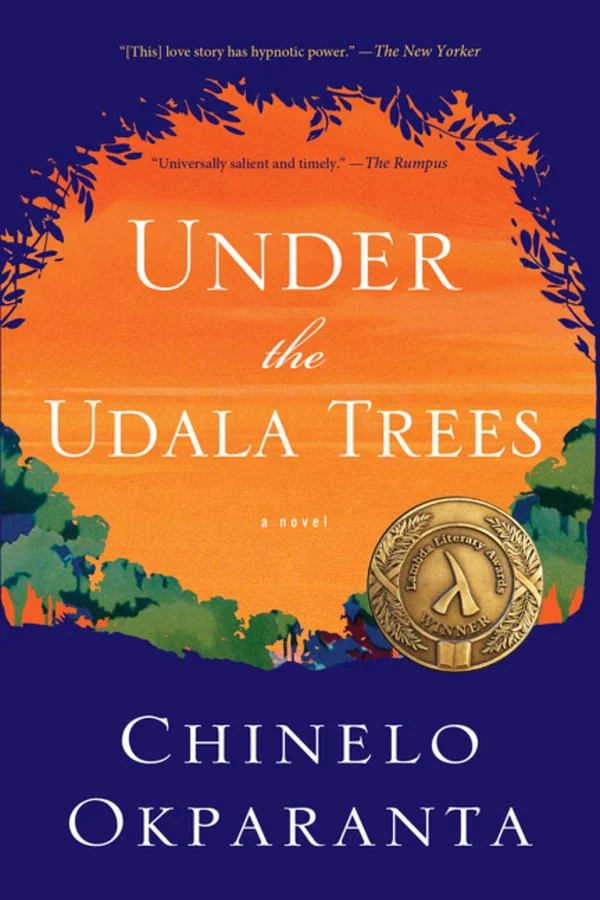
#1 Under the Udala Trees, Chinelo Okparanta
This novel will make you consider the versatility of the udala fruit and its sweet sourness, as the fruit is symbolic of many things occurring in the book. In some ways, this novel is about the secrets people keep from the ones they love, the secrets that occupy their dreams but remain within, the secrets they sometimes shoulder for years.
A bildungsroman, this is a story about Ijeoma, a young Nigerian girl, who experiences loss and abandonment during the Nigerian Civil War. She comes of age during a time when people of her ethnic background are being killed. She meets another displaced girl and as she comes to terms with her sexuality, she realizes that love is also something that could get her killed.
“Papa used to talk a lot about infinity. He used to harp on how there were infinite possibilities for the way anything in life could turn out. Even with a limited number of building blocks, he said, the possibilities were endless.”
What happens when one feels their possibilities are limited? Lyrical, devastating, and still hopeful, the ‘voice’ morphs from a young girl’s to that of a young woman’s as the situation and setting around Ijeoma is tragically revealed. The novel depicts taboos and the limitations that communities and culture place on the individual.
This is my second Chinelo Okparanta read. Her short story collection, Happiness, Like Water, is included in my list of 11 Short Story Collections to Encourage You. Under the Udala Trees was the winner of the 2016 Lambda Literary Awards and in 2017, The New York Times named it one of the “25 Most Impactful LGBTQ Works of the Last 20 Years.”
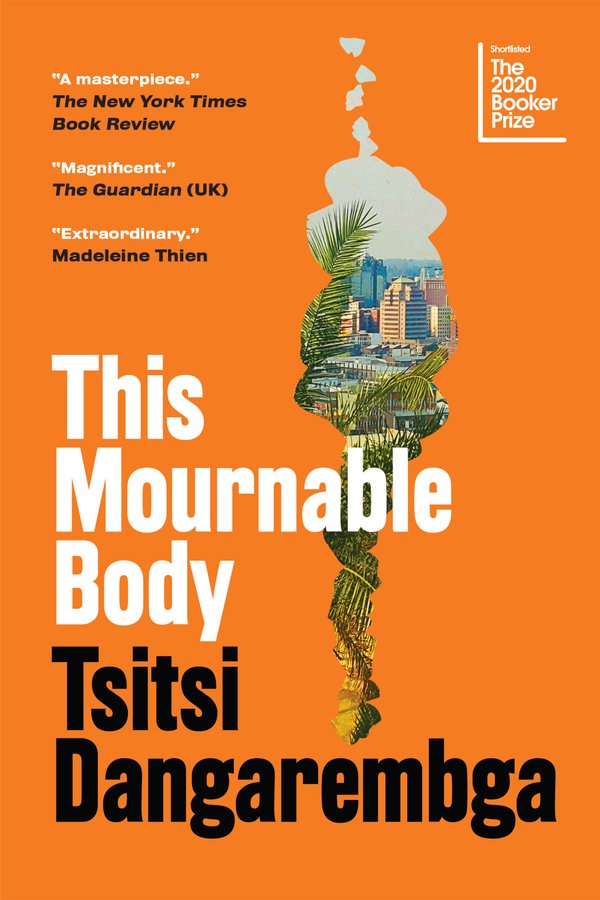
#2 This Mournable Body, Tsitsi Dangarembga
Years ago, I read Nervous Conditions and since then, I’ve been a fan of Dangarembga’s unique style of prose. I was drawn by this novel’s title, and coincidentally I read somewhere that Teju Cole’s “Unmournable Bodies” was the inspiration.
If, like me, you’ve read Nervous Conditions, you will be reintroduced to Tambudzai in This Mournable Body. However, if you have not read it, fear not, for this is a standalone novel that you’ll still enjoy.
After leaving a dead-end job, Tambudzai lives in a dilapidated youth hostel in Harare, Zimbabwe. Seeking to rebuild her life and faced with financial constraints, she moves to a boarding house and becomes a biology teacher. Yet each attempt she makes to enhance her life becomes futile. She is constantly faced with setbacks and as the life she imagines seems unreachable, she reaches her breaking point. She returns home to wrestle with questions about whether one can ever truly return home.
““You recognize you have taken a certain path, arrived at a place you had not known was your journey’s destination and locked yourself in. Sorrow and shame prevent you from divulging your torment and confusion to anyone.”
Written with the second person perspective, the novel delves boldly into the psychological. It is so authentic, so alluring. It is not the easiest of novels to read, as it is both abstract and concrete, and yet it is beguiling.
In some ways, this novel shows how our minds and bodies betray us, how our dreams elude us.This Mournable Body was shortlisted for the Booker Prize in 2020.
#3 The Translator, Leila Aboulela
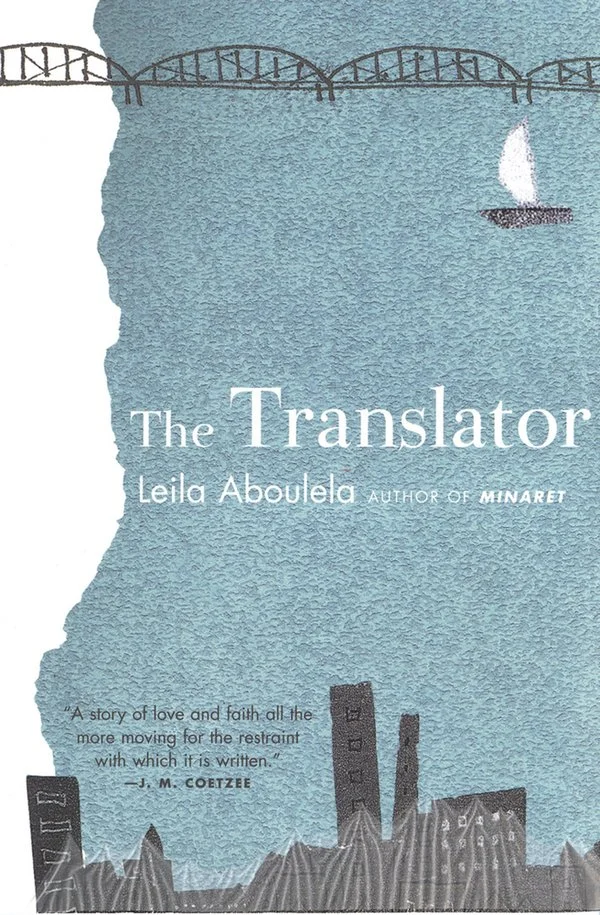
This is my second read from Aboulela (I’ve also read her novel, Lyrics Alley). The Translator, a 2006 New York Times Notable Book, is her first novel and my favorite.
Sammar is a Sudanese widow working as an Arabic translator at a Scottish university in Aberdeen. After the sudden death of her husband, her young son is sent to live with family in Khartoum, Sudan because Sammar is unable to give him the care and attention he needs. Alone, depressed, and grieving, she seeks refuge in her translation work for the Scottish Islamic scholar, Rae. Daily, they bond over discussions of religious texts.
“She thought that it was not true what people said, that time passed quickly when you were happy and passed slowly when you were sad. For on her darkest days after Tarig died, grief had burned away time, devoured the hours effortlessly, the days in chunk after chunk. Now every day stretched long and when Rae spoke to her a few words, when they only saw each other for a few minutes, these minutes expanded and these words multiplied and filled up time with what she wanted to take with her, what she did not want to leave behind.“
Soon, the anger and hurt Sammar feels is redefined as she redirects her energy towards a budding friendship with Rae that slowly becomes something romantic. She strives to decipher whether the relationship is definite or elusive and if they both hold the same things sacred.
An intersection of culture, religion, and love, this novel exquisitely elucidates the vulnerabilities of motherhood and womanhood.
#4 October, Zoë Wicomb
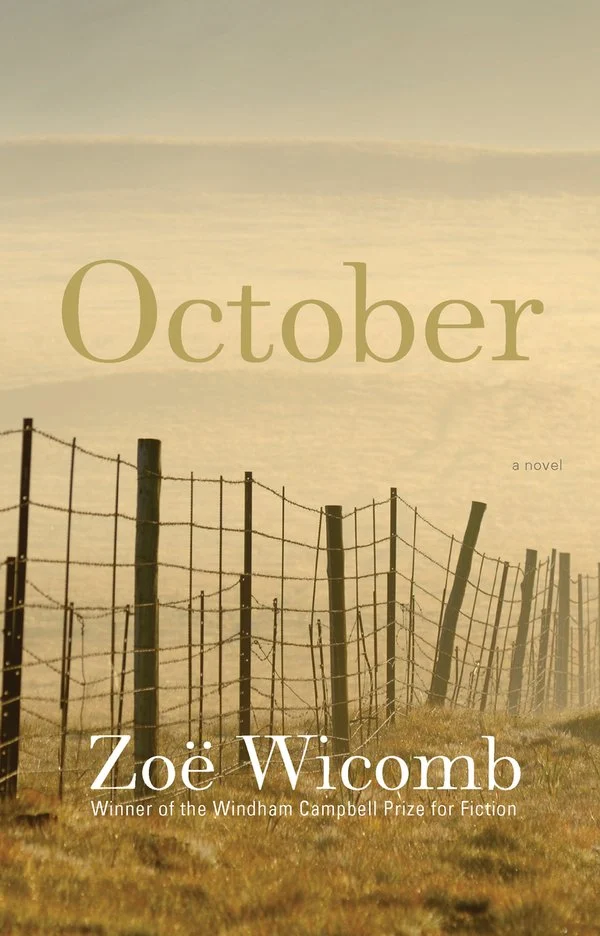
I was introduced to Zoë Wicomb’s short story in The Granta Book of the African Short Story, a collection that I discuss in this post about short story collections, and after that I knew I had to read her novel.
October. Around the world October represents various colors, temperatures, textures. For Mercia, a South African exile who resides in Scotland, it is representative of mood and memory and the things she must come to terms with.
“If nowadays ambition cannot accommodate the old notion of home, there has surely always been ambivalence, the impatience for something new, for moving on, across the world, whilst at the same time, at times, feeling the centripetal tug of the earth.”
Mercia is a fifty-two-year-old academic who has been living in Scotland with her partner when, after twenty-five years, he ends the relationship. Childless, she returns home to South Africa to help her alcoholic brother and realizes she may have to parent her brother’s son. While she is there, she heals through writing and revisits her tortured childhood.
A reflective novel, October offers a different perspective of homegoing: that perhaps leaving is a form of letting go and that maybe going back validates those choices. The pensive narrative also depicts the necessity of solitude when coping with traumatic memories.
It is a novel that helps the reader ponder life, the homes we leave and lose, the people we become. October was the Winner of the 2013 Windham Campbell Prize for Fiction.
#5 The Map of Love, Ahdaf Soueif
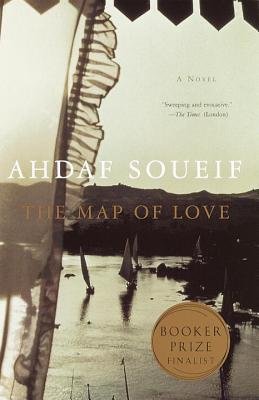
I relished this novel for the ways in which it traces a matriarchal heritage. I enjoyed how it infuses letters, poetry, and art. How love stories are intertwined.
When her husband dies, Anna Winterbourne leaves England for Egypt, lured by paintings which help her grieve. She enters Egypt as the resistance fights against British occupation. She falls in love with an Egyptian politician during a time when she is ostracized by her European community for being with an Egyptian.
“How can it be that a set of the shoulders, the rhythm of a stride, the shadow of a strand of hair falling on a forehead can cause the tides of the heart to ebb and to flow?“
One hundred years later, Anna’s great-granddaughter, Isabel, an American, finds her great-grandmother’s journals and enters her world of love. She soon finds that her great-grandmother’s love life parallels hers. When Isabel has difficulty translating the journals written in Arabic, she enlists the help of Amal. Amal is an Arab woman, separated from her husband and children, who has returned to Egypt after years of living abroad. Amal does not know she is connected to Isabel until she starts to read the journals of Anna Winterbourne.
In it she also finds some poetry from Aidoo, Milton, Spenser, Shakespeare, and Elizabeth Barrett Browning.
The face of all the world is changed, I think
Since first I heard the footsteps of thy soul.
The Map of Love is an intricate weave of perspectives and timeframes, of poetry and prose, of love affairs and politics, of the epistolary and narrative forms. It was shortlisted for the Booker Prize in 1999.
#6 The Memory of Love, Aminatta Forna
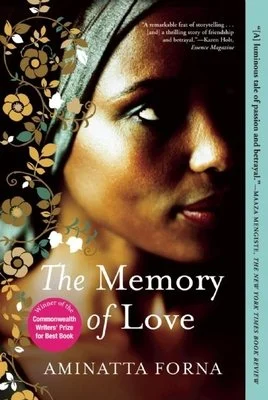
This novel is a sweeping tale of love and betrayal that span decades. The force from the memory of love is nostalgic and heartrending. It is a book that will devour you. When I listed this novel on The Core Shelf: 50 Novels Every Personal Library Deserves, I noted that the novel made Forna one of my favorite authors. There is the story, and then there are underlying stories. Some writers blend them so well it astonishes.
Set in post-war Sierra Leone, the story centers around Adrian Lockheart, a British psychologist, and his patient, Elias Cole, an elderly British lecturer. Elias reflects on his past obsession with Saffia, the wife of his Black colleague, Julius, and how this results in the ultimate betrayal that would affect Julius’s life. There is also Kai, the Sierra Leonean surgeon who has dreams of practicing medicine in America, however, he harbors his own secrets of war. When Elias, on his deathbed, tells the story of his past to Adrian, you think this is the straightforward story of betrayal, but it is not.
“It is submission, submission in the face of the inevitable. People think war is the worst this country has ever seen; they have no idea what peace is like. The courage it takes simply to endure.”
The winner of the 2011 Commonwealth Writers’ Prize for Best Book, The Memory of Love is complex, layered, and pulsating. It is at its best when it depicts the psychological scars of war.
#7 Americanah, Chimamanda Ngozi Adichie
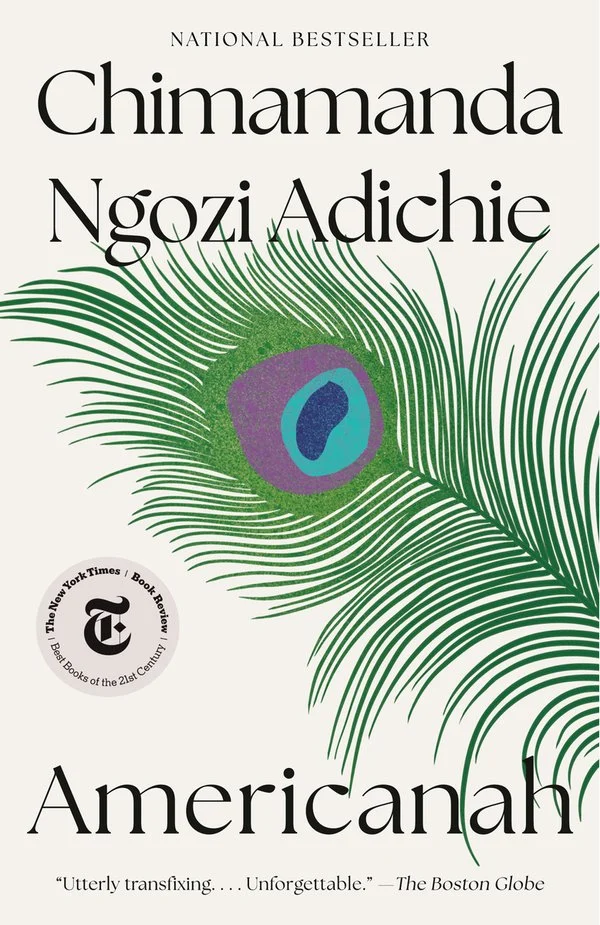
The setup to this novel is alluring.
By the way, as I’ve mentioned before on Goodreads, if you’ve ever been to an African hair braiding salon, you understand why this novel started with this setting.
If you are a Black person who has been to an African hair braiding salon, you realize why this novel started with this setting.
If you are an African immigrant who has been to an African hair braiding salon, you know why this novel started with this setting.
What a clever technique.
And no, this novel is not only about hair. Hair management in this novel symbolizes many things, but most importantly, it shows the divide between cultures and within the African diaspora. I own and have read five of Adichie’s books, and they all have a special place on my bookshelves. Her novel, Half of a Yellow Sun, is also listed here on my Core Shelf. This novel solidifies why Adichie is one of my favorite authors.
Ifemelu and Obinze are young and in love when they depart military-ruled Nigeria for the West. Ifemelu heads to America for college, where despite her academic success, she is forced to grapple with what it means to be Black in the U.S. Obinze who was supposed to have been the first one to America and who had hoped to join her, instead finds himself living the life of an undocumented immigrant in London. Fifteen years later, they reunite in a newly democratic Nigeria and discover the people they have become after exile and estrangement.
“Her nightshirt smelled of his cologne, a muted citrus and wood scent, because she left it unwashed for as long as she could, and she delayed in wiping off a spill of hand cream he had left on her sink, and after they made love, she left untouched the indentation on the pillow, the soft groove where his head had lain, as though to preserve his essence until the next time.“
The striking distance and closeness of this third-person perspective is intriguing. At its core it is both a love story and a story of identity. Adichie borrows from James Baldwin’s technique of critiquing race and class issues in America, except that she does it in an authentic way with a character who probes from her angled and unique perspective as a Black immigrant in America.
Separated from family, assimilating in a new community, dating both within and outside of her race and culture, Ifemelu is faced with the harsh realities of the social constructs of her New England communities. She starts a blog titled, “Traveling While Black,” surprising her friends and family, even herself, with her viewpoints. Once the novel explores how race affects class, it becomes even more layered and distilling.
Americanah was the winner of the 2013 National Book Critics Circle Award for Fiction and was also named one of The New York Times 100 Best Books of the 21st Century.
#8 Changes: A Love Story, Ama Ata Aidoo
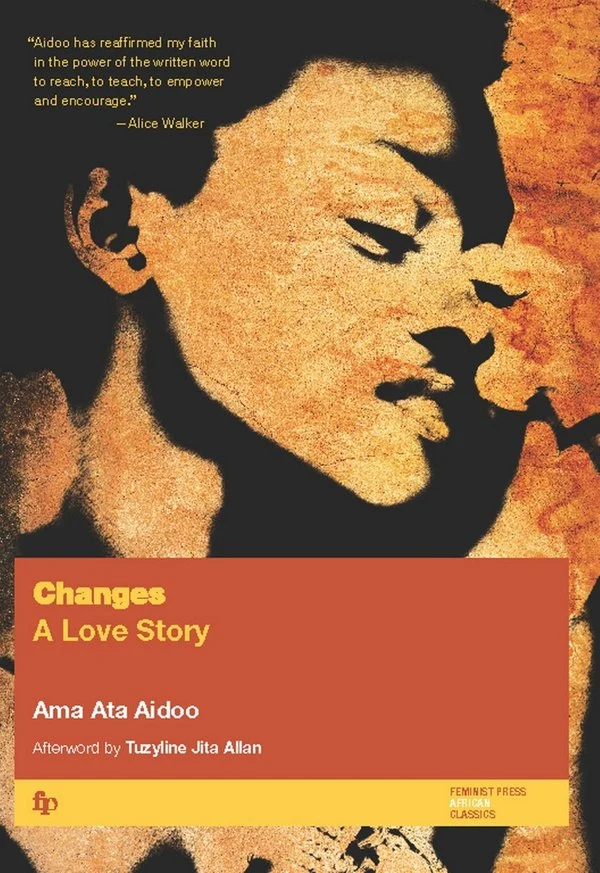
Changes follows a woman whose idea of a love life is rooted in choice and independence.
Esi is a statistician living in Accra, Ghana when she ends her marriage with a man who is dangerously obsessed with her but whom she does not love. Instead, she falls in love with a wealthy and married womanizer named Ali. Soon she is faced with the choice to become Ali’s mistress or his second wife. She chooses the latter. And it is this drama, this psychological and social upheaval, that makes Changes a fascinating read.
“…Remember that a man always gains in stature any way he chooses to associate with a woman—including adultery—but in her association with a man, a woman is always in danger of being diminished…”
Fractions of Ghanian culture is explored gracefully, the institution of the monogamous and polygamous marriage examined seamlessly through story, and self-actualization permeates the novel as two best friends, Esi and Opokuya, inquire about each other and by doing so, uncover truths about themselves. Changes won the Commonwealth Writers’ Prize for Best Book in 1992.
#9 Zenzele: A Letter for My Daughter, J. Nozipo Maraire
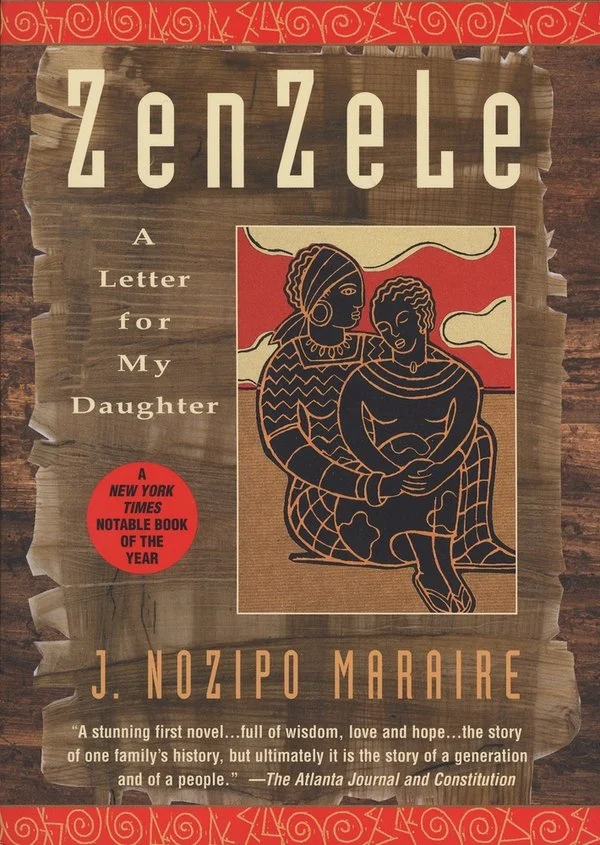
What historical legacies do we pass on to our children and which ones will they keep or discard, is what this compact novel seems to ask. If you are an immigrant or the daughter of an immigrant, this novel is an elegantly expressed conversation you have heard before.
This novel in letters is from a Zimbabwean mother to her daughter, Zenzele, who is leaving to attend college in the United States. Conversational and laced with African parables, it is replete with stories of Zimbabwe’s fractured history as the former Rhodesia, and rife with cultural juxtapositions and expectations. It is a story of motherhood, of womanhood, of migration and heritage.
“It is to be strong, Zenzele. It is to be at peace within. You must always listen to that inner voice and not permit others to drown it out. It is to measure your words; to balance your works with your gifts carefully; it is in some ways to be selfless, to serve others yet to know and defend your rights to the bitter end.”
A poignant novel, Zenzele manages to be both layered and compressed, a blend of history and storytelling. The novel offers a unique perspective from a historical period that produced many novels and memoirs. Zenzele was a New York Times Notable Book of the Year in 1996.
To discover more books from Africa, please browse my Africa Bookshelf or my Reading Around the World Africa bookshop. Please support Reading Around the World and independent bookstores by purchasing through one of the links provided.